I adore reconstructions like this!
I adore reconstructions like this! The artist Bob Marshall, drawing on sketches, plans, archaeological evidence and the findings of GPS surveys, has recreated the story of how Windsor Castle grew from a wooden fortress built by William the Conqueror in the eleventh century into the palace that serves today as an official royal residence.
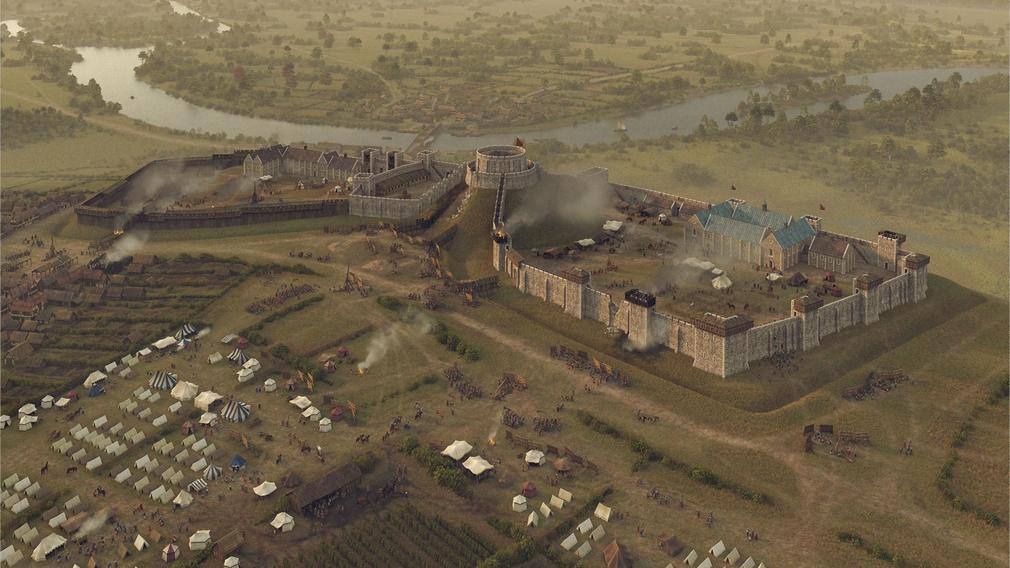
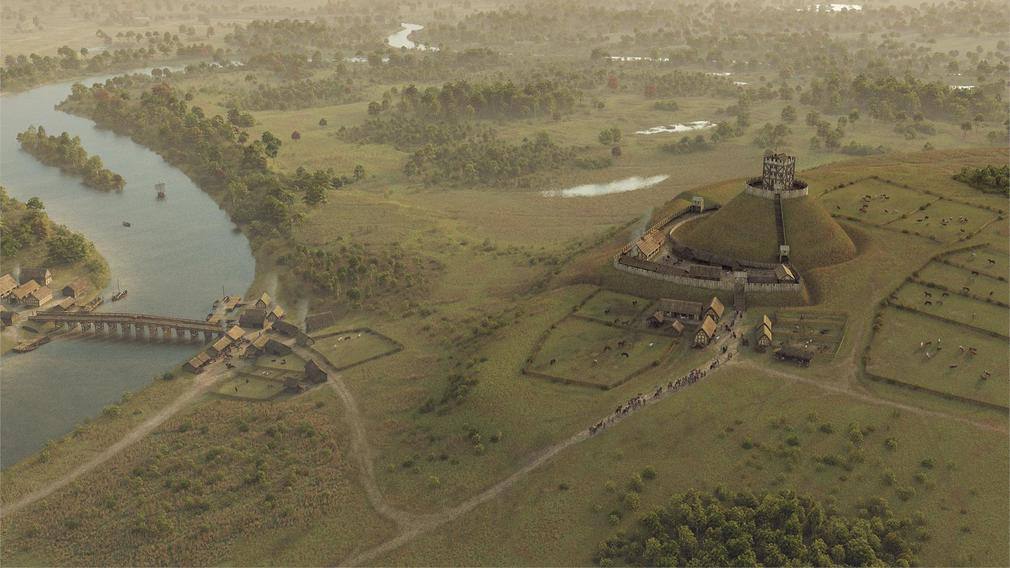
These three drawings show 200 years in the life of Windsor Castle.
The first illustration recreates the castle in its earliest form, the so-called motte and bailey, or mound-and-palisade type. The motte is a hill or mound on which a wooden or stone keep was raised, from which the defenders could shoot during a siege; the bailey is the yard beside that hill, enclosed by a stockade and an earthen rampart, which served as the fortress proper. The drawing shows the motte and bailey put up by William I around 1086 to guard the Thames valley. Of these structures, what has survived to our own day is the mound on which the famous Round Tower of Windsor Castle stands.
The weakness of King John Lackland, who proved incapable of honouring the obligations of Magna Carta, led to civil war, in the course of which the rebel barons offered the English throne to Louis, son of Philip II of France. In May 1216 he landed with an army on English shores and besieged for two months precisely such a Windsor Castle as appears in the second drawing.
The reign of Henry III that followed, from 1216 to 1272, belongs to a more brilliant age in the history of English royal building and court culture. Under Henry III Windsor acquired stone walls. Indeed, according to research, most of the castle's stonework of the twelfth and thirteenth centuries survives in the present buildings.