“Oh, how I feel the accumulated burden of poisoned nights and bitter-sweet days!” wrote Annensky in “The Longing to Return” in 1909, and ever since the burden has gone on accumulating, though the vessels in which it is customarily kept keep changing
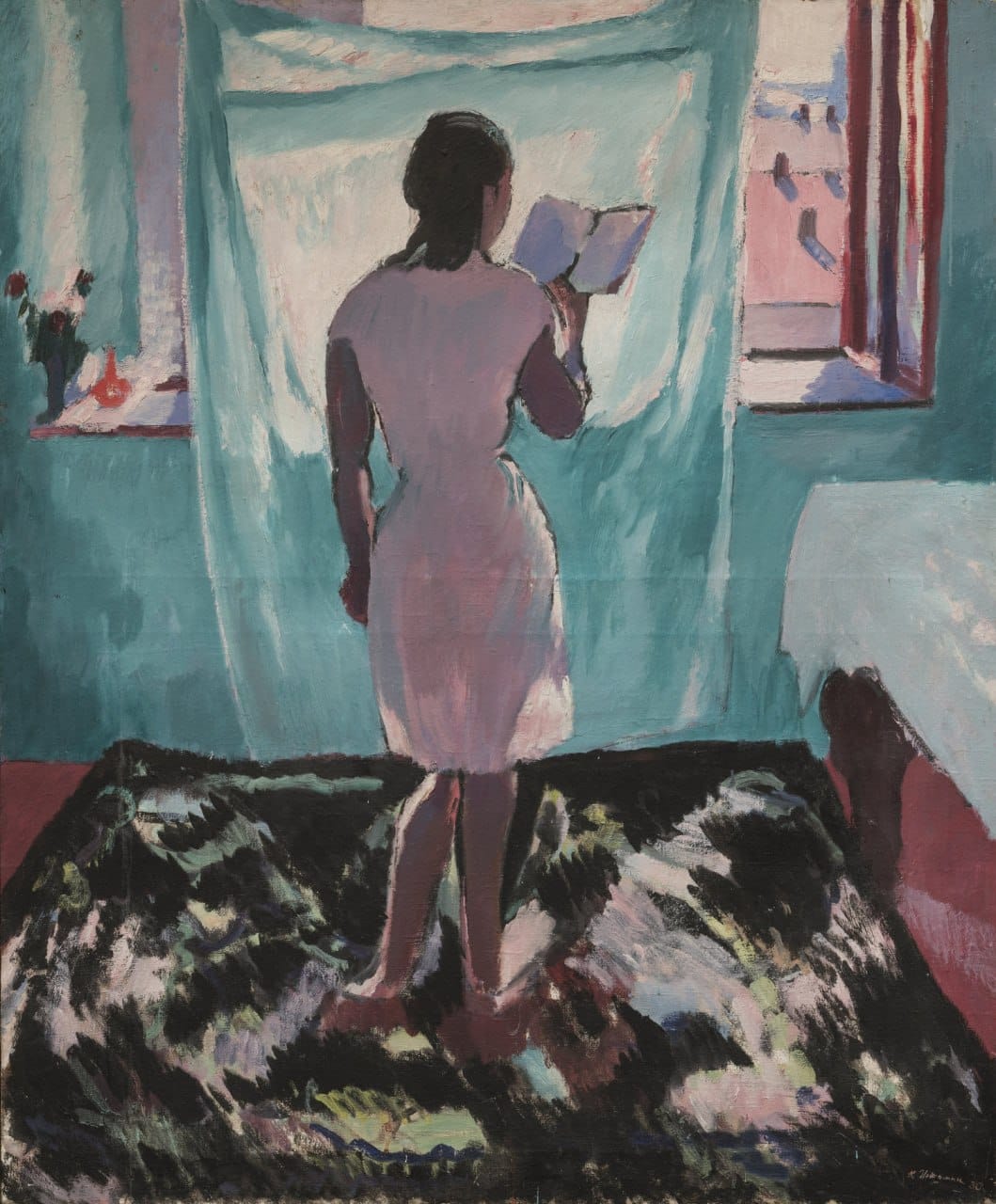
“Oh, how I feel the accumulated burden of poisoned nights and bitter-sweet days!” wrote Annensky in “The Longing to Return” in 1909, and ever since the burden has gone on accumulating, though the vessels in which it is customarily kept keep changing. This week our rubric on where to go offers five exhibitions in which that very burden of bitter-sweet days has been poured out across different epochs and styles: from the VKhUTEMAS communes to Berlin emigration, from Ossetian courtyards to Stalinist skyscrapers.
☎️“House 21. Visiting the Artists” at the Zotov centre, 30 April to 30 August. An imaginary journey through five flats of the legendary VKhUTEMAS house at 21 Myasnitskaya Street, where in the 1920s Rodchenko and Stepanova, Drevin and Udaltsova, Miturich and Khlebnikova, Klutsis and Senkin, Favorsky and his pupils lived and worked. More than two hundred works from 22 museums are on show, together with an architectural scenography by Yevgeny Ass. The chronological point of gravitation is fixed at around 1934. Formalism has already been declared anti-Soviet, but the repressions are still to come. A recognisable final episode in the happy life of this commune.
🏞“Viktor Kalinin. In the Space of Life” at the New Tretyakov Gallery, 22 April to 21 June. Marking the 80th birthday of an artist of the 1970s generation who continues the line of the Russian painterly tradition, from family portraits and the Altai landscapes of his native village of Zalesovo to the biblical themes of recent years. The exhibition is intimate, confined to a single hall, the 38th, but includes five canvases that Kalinin donated to the Tretyakov Gallery in 2024, among them “The Family”, “Unsaddling the Horse” and “Autumn 1941”.
🗡“Khadzar of Dreams” at the GES-2 House of Culture, 23 April to 6 September 2026. The final point of the project “GES-2: Cities”, devoted to the Ossetian khadzar, the courtyard pavilion between the apartment blocks of Vladikavkaz, where neighbours hold weddings and wakes and carry on conversations for decades. Inside GES-2 a temporary khadzar has been built, and beside it stands a gallery-cinema, where the audience is made up of Soslanbek Edzeev’s stone highlanders of the early twentieth century.
🇩🇪“(UN)known. Konstantin Gorbatov” at the New Jerusalem Museum, 29 April to 30 August. Marking the 150th anniversary of the Russian Impressionist who emigrated to Berlin in 1922 and remained there until his death in May 1945. About 80 works, a reconstructed Berlin flat with a farewell letter-testament addressed to the homeland, and the story of how the paintings returned to the USSR through a special commission and settled precisely in Istra, where the world’s largest collection of Gorbatov, 120 works, is kept today.
😺“Dmitry Nalbandian. From Satire to Canon” at the Nalbandian Museum-Studio, 8/2 Tverskaya, from 29 April to 6 September. The project focuses on the paradoxical trajectory of an artist who began in the 1930s as a caricaturist for the magazine Krokodil and ended as an academician and portraitist of all the Soviet leaders from Stalin to Brezhnev.