Saint Iphigenia and the Theories of Her Origin, from Axum to Crimea and Colchis
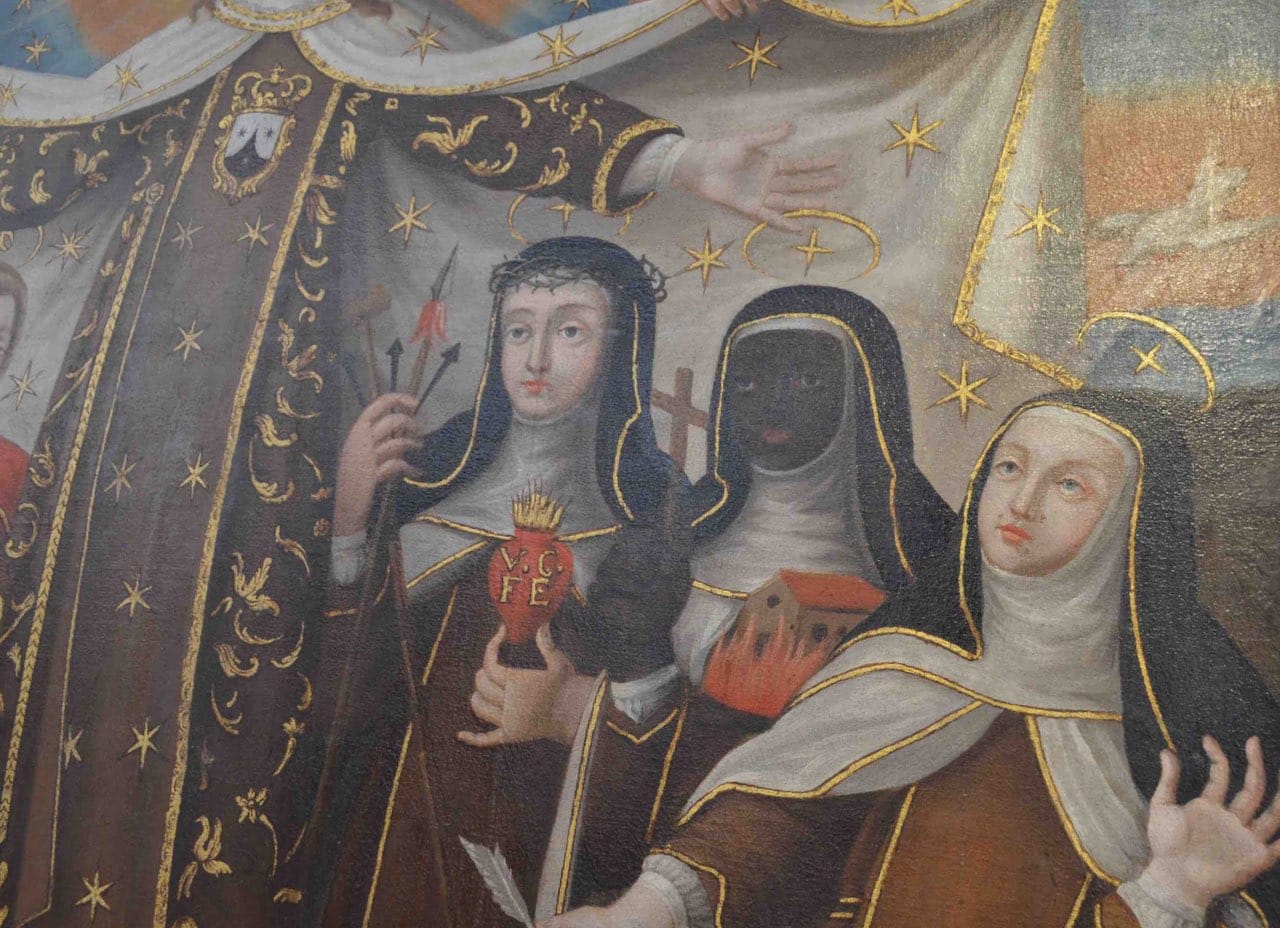
In the photograph with Iphigenia, the Ethiopian king's daughter from the Martyrdom of St Matthew, there are two young saints: Maria Maddalena de' Pazzi, a Carmelite nun of the 16th and 17th centuries who recorded in her diary mystical apparitions of the Mother of God and of Jesus, and the reformer of the Carmelite order, one of the Doctors of the Church, Teresa of Ávila. According to legend, Iphigenia was converted to Christianity, together with her whole family, by the Apostle Matthew himself and appointed abbess of a women's Christian community. The discussions of St Iphigenia's biography are of interest, for in antiquity the name Ethiopia was given to various territories: the Kingdom of Aksum in the north of the Ethiopian Highlands, Phoenicia, Nubia, India, and even Crimea with the Black Sea coast of the Caucasus. There are no historical parallels between the personality of St Iphigenia's father and the rulers of Aksum and Nubia, where Matthew never preached. But a possible Crimean and Colchian origin for Iphigenia is supported by folkloric, linguistic and historical evidence alike, which makes the saint far more interesting to us: what if she really was a Crimean after all