To put it mildly, the people and the court received the news of Catherine de' Medici's death with mixed feelings
To put it mildly, the people and the court received the news of Catherine de' Medici's death with mixed feelings. Here are a few interesting remarks about the poor old lady.
“There were those who said all sorts of things about her death, and even about poison. Perhaps so, perhaps not, but she died, and perished of vexation,” wrote Pierre de Bourdeille, seigneur de Brantôme, chronicler of Catherine de' Medici's court life.
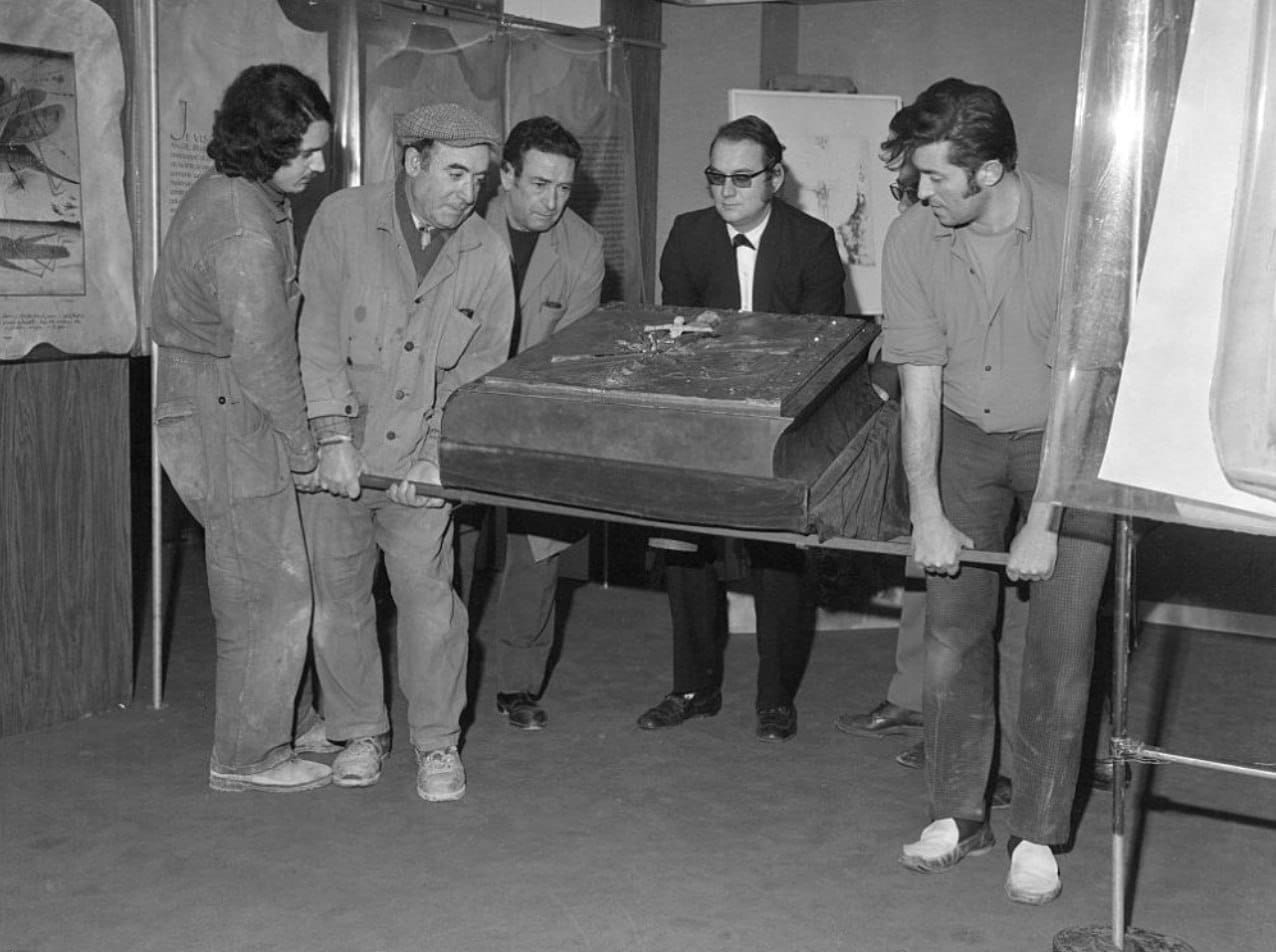
“By the King's order the Queen's body was opened: there was a damaged lung, steeped in blood, with an abscess on the left side. The body was embalmed and placed in a lead coffin, which was in turn lowered into a wooden one. The crowds that had gathered were then allowed to look upon the Queen: her body was dressed in the finest golden garments to be found in the palace and carried from the bedchamber into the audience hall. Many ladies in mourning remained beside the body, which was surrounded by numerous candles, while the Franciscan fathers read psalms all night long,” ran the report left by the papal legate.
“She lived well for a woman as round and fat as she was. She had a good appetite and ate exceedingly well. But the Parisians decided that she had arranged, and given her consent to, the death of the princes of Lorraine. It was said that if her body were brought to Paris to be buried at Saint-Denis, in the magnificent tomb in the Valois chapel which in her lifetime she had built for herself and the late King, her husband, they would throw it on the rubbish heap or into the river,” so the memoirist Pierre de L'Estoile, author of the famous recollections of French life in the sixteenth century, described how the Queen's death was received.
Or here is a remark by the preacher Guincestre: “She did much good and much ill. Today it is very hard to choose: ought the Catholic Church to pray for one who lived so badly and so often upheld heresy, and who at the end of her life, as they said, spoke for our righteous League and would not consent to the death of our good princes? And so I shall tell you that if by chance, out of charity, you remember her with a pater, Almighty Lord, or a Hail Mary, Virgin Mother of God, it will serve her as best it may; I leave it to your judgement.”
Some reproached the King for his indifference at his mother's passing: “She had not yet drawn her last breath, and already she interested him no more than some rotting carrion.”
The Queen's funeral was described in his memoirs by Étienne Pasquier: “It is true that the body was poorly embalmed, and after a few days a foul smell began to come from it, and when the King had gone away she had to be buried in the middle of the night; not under vaults, for there were none, but straight in the ground, just like the humblest of us mortals; and even in such a place in the church where there is no indication that she lies there.”