Luca Mombello: a name all but forgotten outside Italy, yet in the sixteenth century this painter held a place of his own
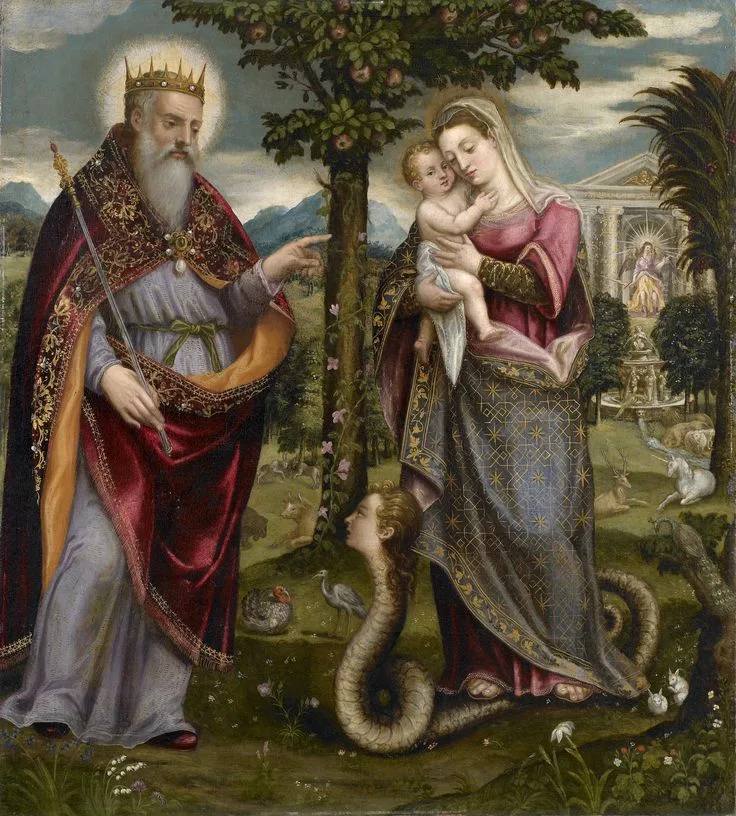
Luca Mombello is a name all but forgotten outside Italy, yet in the sixteenth century this painter held a place of his own. His painting “The Immaculate Virgin and God the Father”, made somewhere between 1560 and 1580, conveys that delicate borderline where spirituality is interwoven with sensibility.
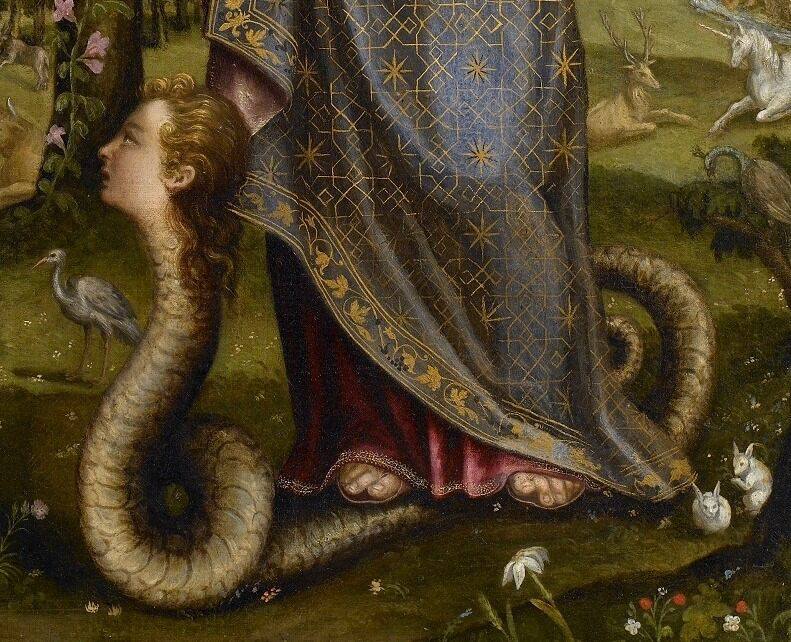
At the centre of the composition stands the Virgin Mary as the embodiment of purity, the Immaculate One, untouched by original sin. She is shown in a small garden full of flowers and light, reminiscent of a new Paradise. Beneath her feet a serpent writhes, the symbol of evil vanquished by faith. Beside her rises God the Father, wrapped in radiance, as though confirming the sanctity of what is taking place and blessing it.
There is no dogmatic severity in this work: every detail breathes gentleness, reverence and quiet joy. Mombello knew how to speak of the sacred in the language of beauty, and his Immaculate Virgin sounds less like an icon than like a poem on sinlessness and on heavenly light descending to earth.
As for the serpent at the Virgin's feet, he looks as though he has understood that his career in temptation is over for good. Looking at him, one is tempted to say: this is what happens when you try to seduce a woman with God the Father himself standing behind her