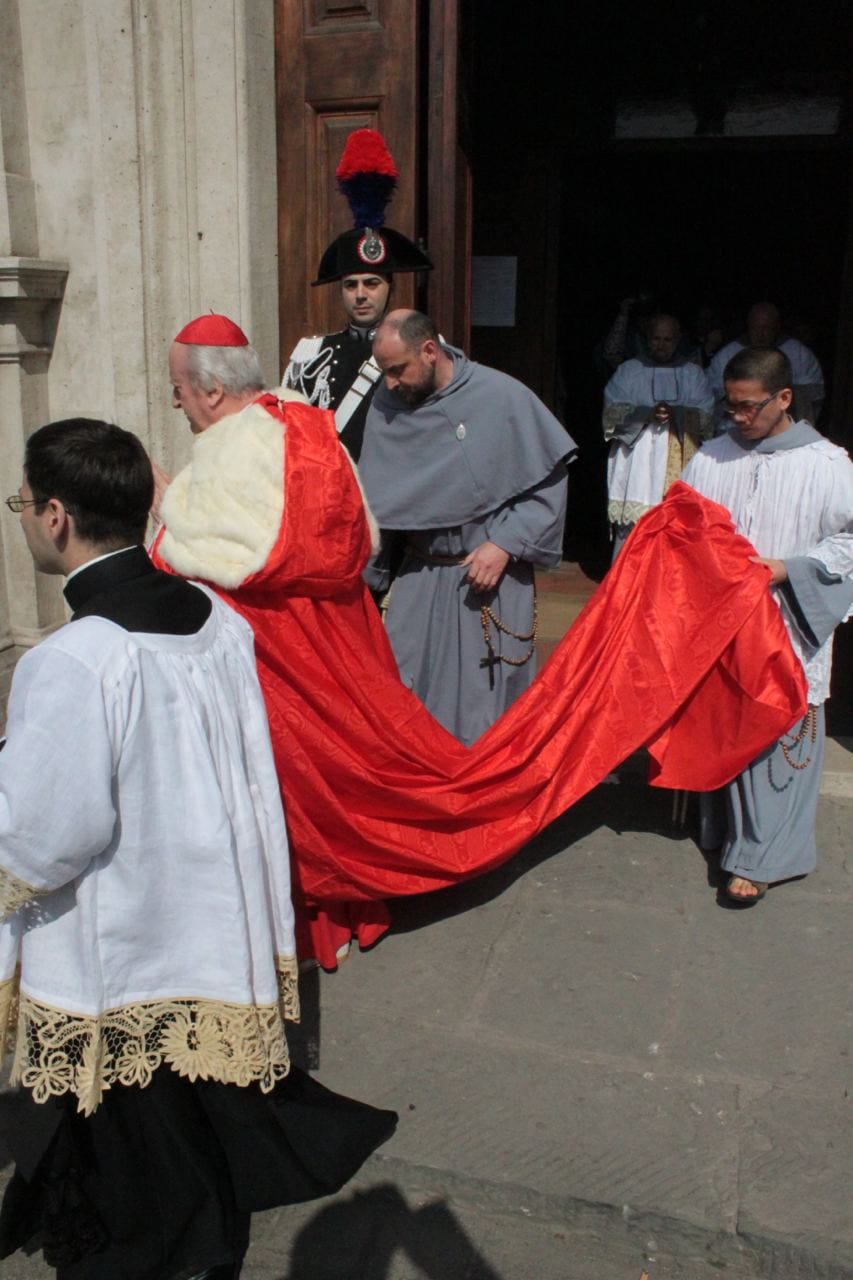
Cardinal Franz Rode in cappa magna and the symbolism of the bishop's vesting ritual
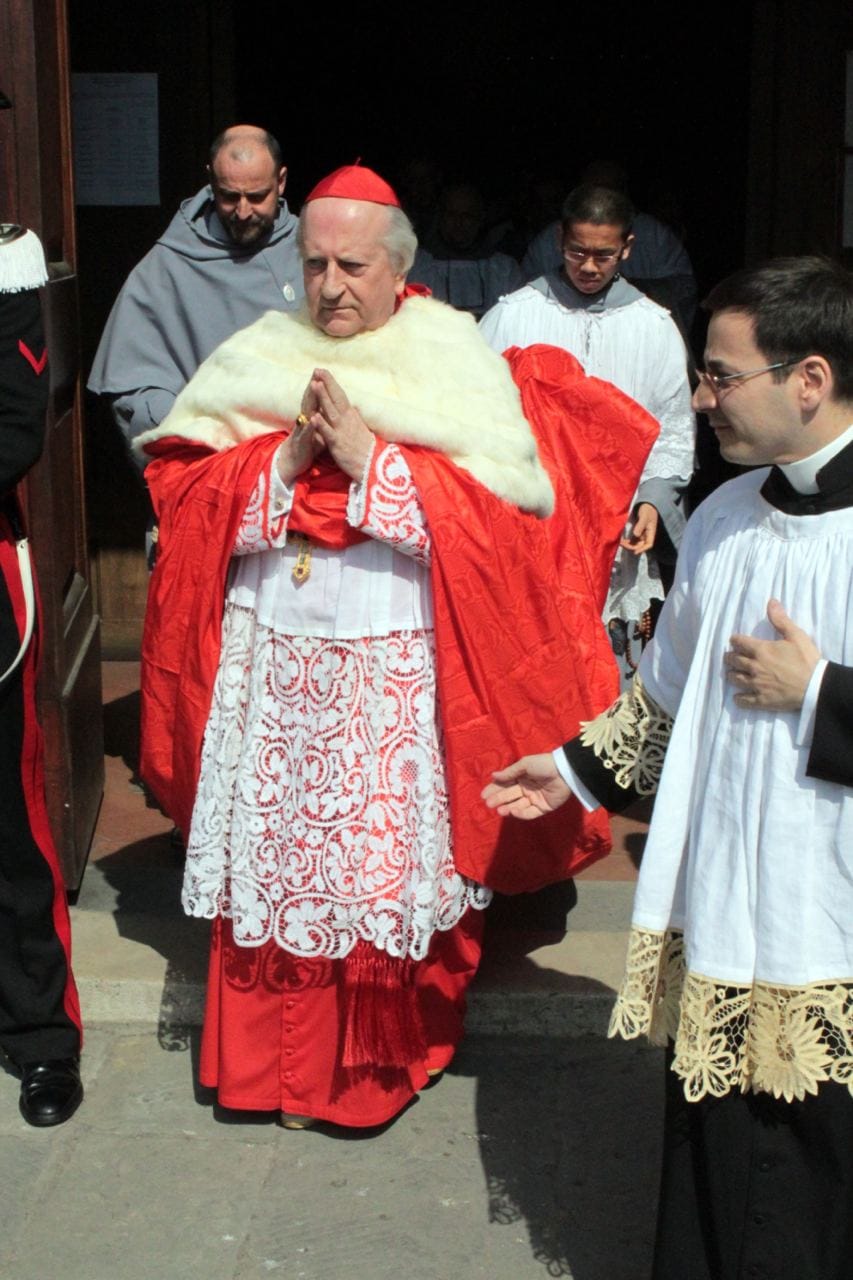
Cardinal Franz Rode in cappa magna. This is not merely a mantle borne aloft by several attendants; it is a kind of embodiment of the splendour of the world and the might of Christian values. Having donned the great mantle, the priest then divests himself of it in public, appearing before the clergy in humility, and thereafter, as it were, is gradually turned into a new man according to the precepts of the Apostle Paul, taking in turn the baptismal alb, the dalmatic of forgiveness and the chasuble of mercy. After this symbolic investiture in the image of Christ, the prelate enters the church for a second time. In a word, the very ritual of vesting in the cappa magna conveys one of its ideas: the abandonment of worldly power and glory far from the altar, namely the public removal of this sumptuous garment from the bishop and, as it were, his equation with the whole assembly, after which he enters the church already in priestly dress. There is a paradox in the condemnation of such details of church life by progressive critics: those same people would most likely call a comparable rite mesmerising and extraordinary, were it a matter not of the dominant religion but of some local belief