IMLI RAN has published a two-volume study, "F.M. Dostoevsky's Novel Crime and Punishment: The Current State of Scholarship"
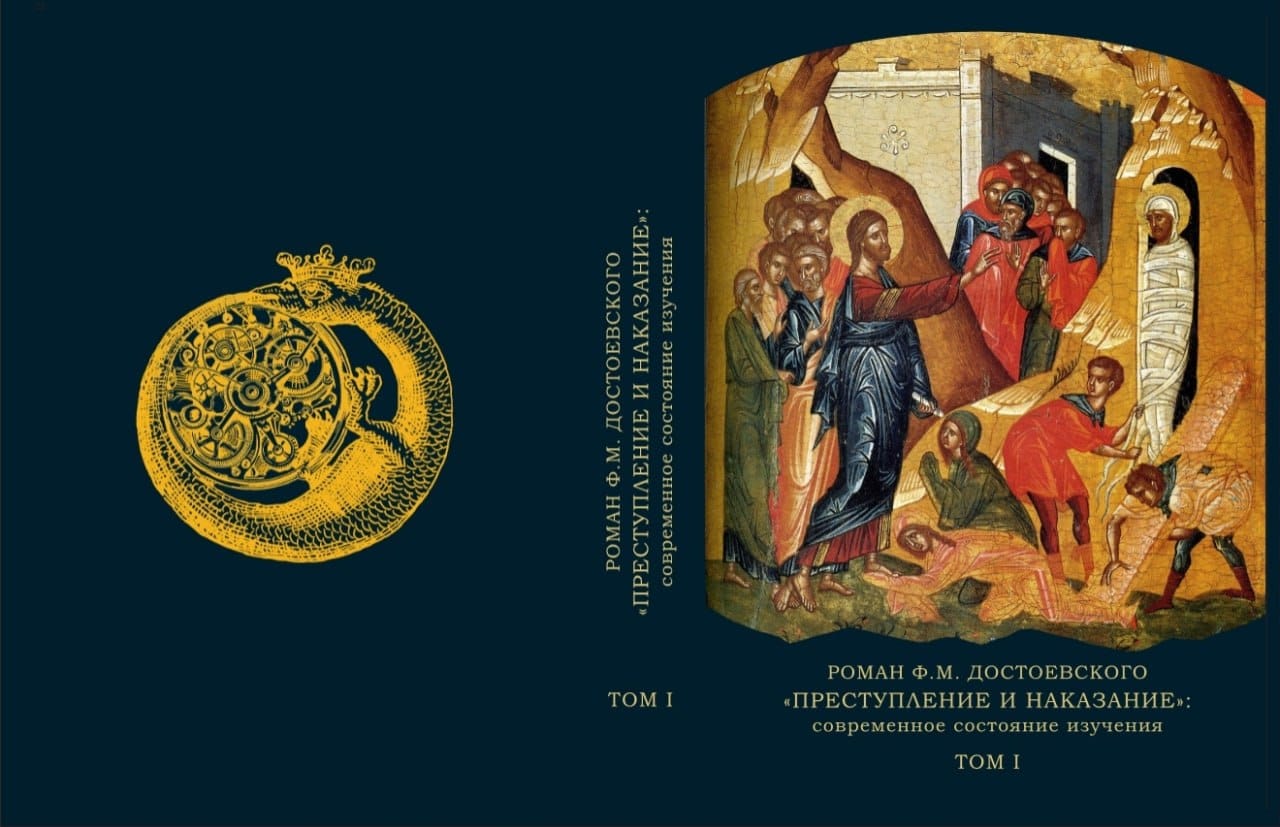
IMLI RAN has published a two-volume study, "F.M. Dostoevsky's Novel Crime and Punishment: The Current State of Scholarship", edited by T.A. Kasatkina. It is the fourth book in the "current state of scholarship" project on Dostoevsky: before it came The Idiot in 2001, The Brothers Karamazov in 2007, and The Adolescent in 2022.
In a quarter of a century the institute has prepared a large-scale analysis of everything of importance said in the academic world about Dostoevsky's key works. And now I dream of acquiring the whole series.
The table of contents includes: Dostoevsky's theology and the reception of the novel by Catholic theologians, the dreams of the characters, the poetics of the gaze, the gesture and bodily movement, the images of Napoleon and Newton in the consciousness of a nineteenth-century person, "meaningful names" and symbolic objects and details. A separate section is devoted to artistic reception in the twentieth and twenty-first centuries: screen adaptations, stage productions, illustrations and, no joking, fan fiction. It is interesting to live in an age when fan fiction on Dostoevsky finds itself under the same cover as a liturgical subtext.
But in essence, the further a novel recedes from us in time, the thicker the layer of commentary grows, and at some point the apparatus of study turns out to be more massive than its object. Though in my view it is the finest monument both to Dostoevsky and to the way Russian philology studies its own heritage.