A team of researchers from the Catalan Institute of Human Palaeoecology and Social Evolution has found traces of cannibalism in three caves in southern Spain
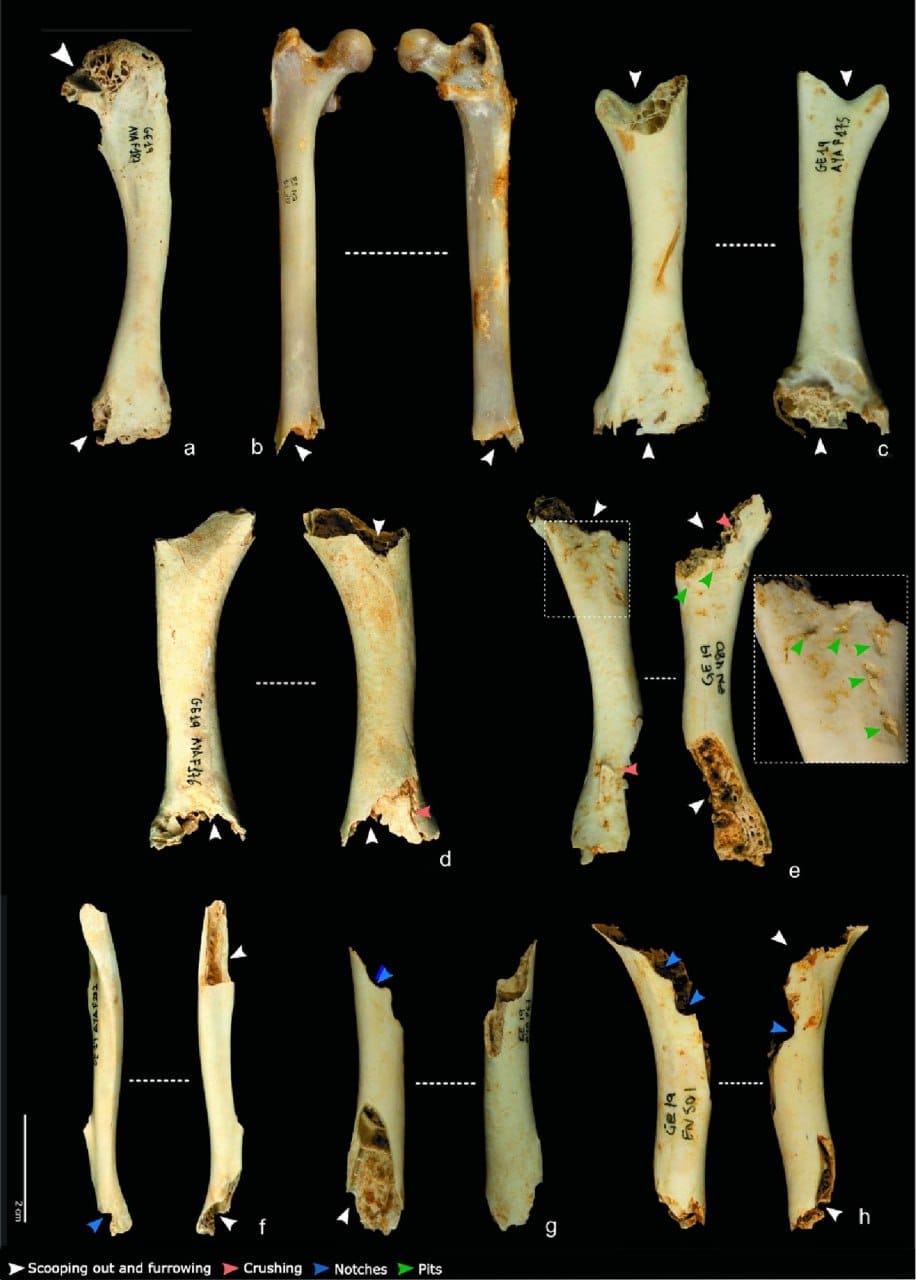
The scholars examined some one thousand human bones and teeth from the caves of Malalmuerzo, Carigüela and Maiolicas. They looked for signs pointing to the eating of human flesh: butchery marks, characteristic fractures, traces of boiling and tooth impressions. By butchery marks archaeologists mean the cuts and notches left on a bone when the meat is sliced from it with a stone tool.
In the cave of Malalmuerzo the researchers found the remains of at least 36 people who lived between 5300 and 4950 BC, that is, in the Early Neolithic. According to the scholars' supposition, these people met a violent death in the course of a single event. More than half of the remains bear traces of boiling, and two skulls show injuries from a blow with a blunt object.
The bones from the cave of Carigüela belong to the greater part of the Neolithic period, and nearly all of them carry butchery marks. Two skulls were turned by the cave's inhabitants into drinking vessels.
The bones from the cave of Maiolicas date to between 3950 and 3760 BC, that is, the Late Neolithic. They were stained red with cinnabar. The researchers consider that in this case cannibalism may have formed part of a funerary or some other ritual