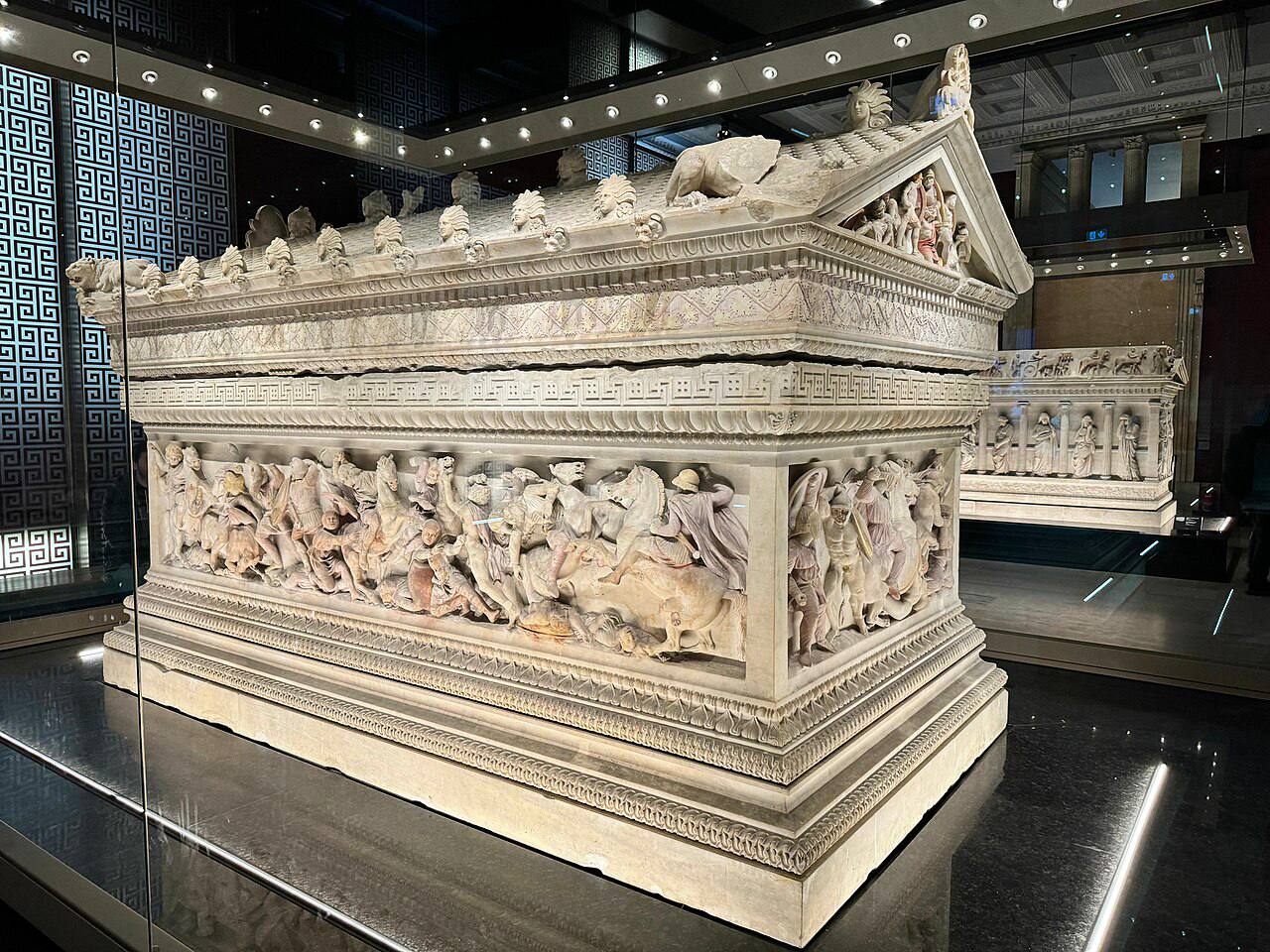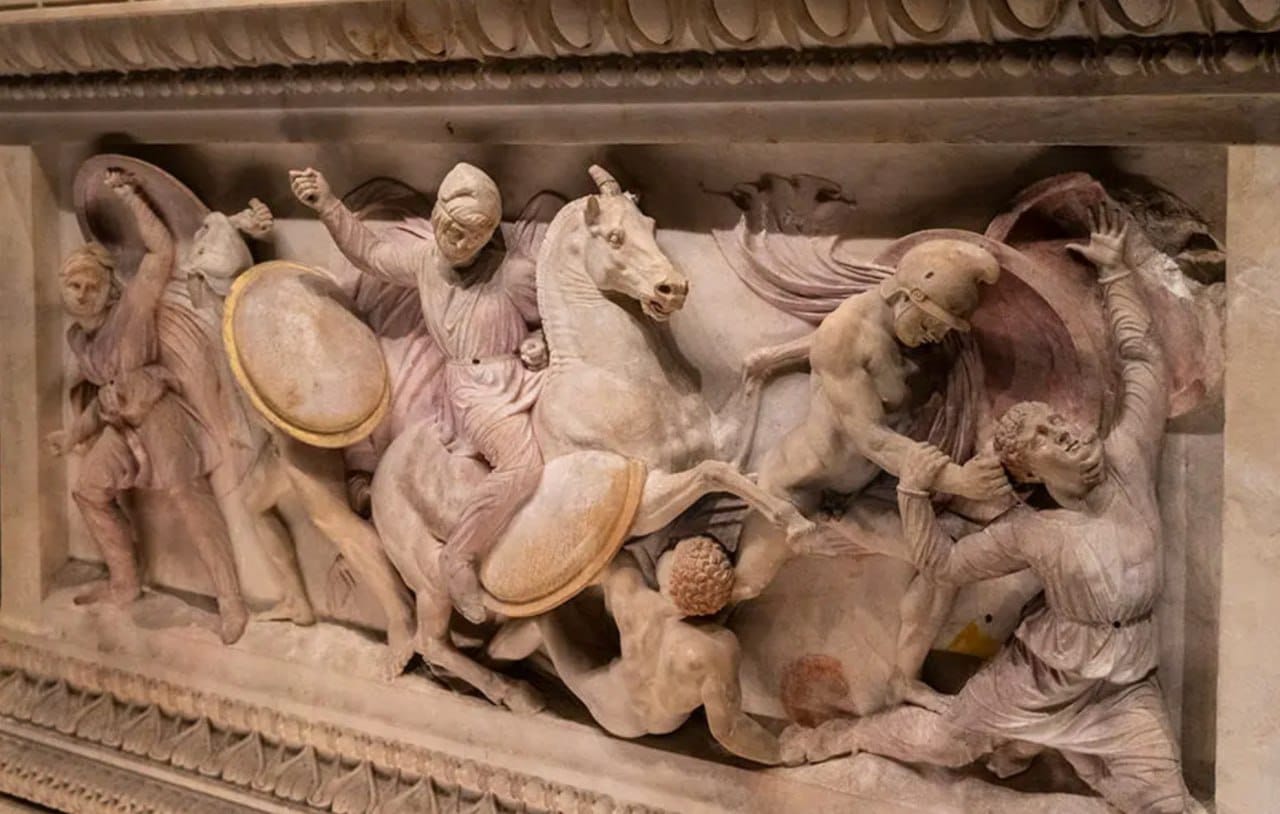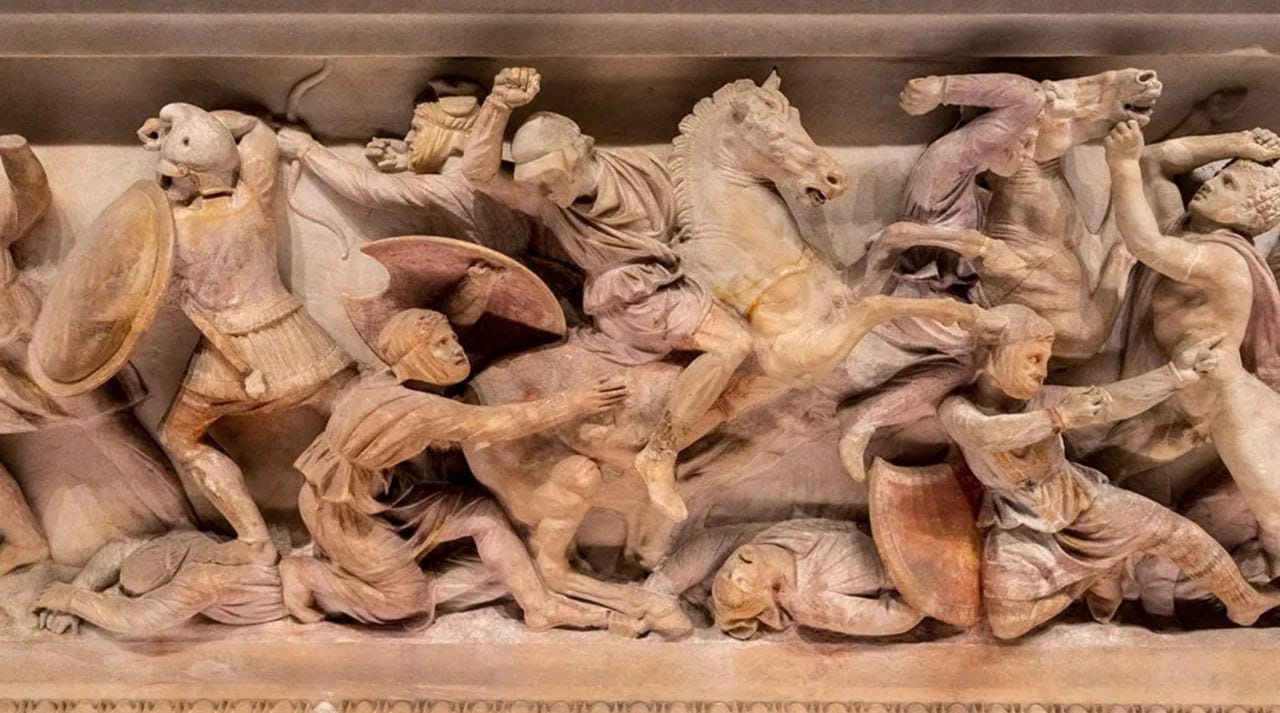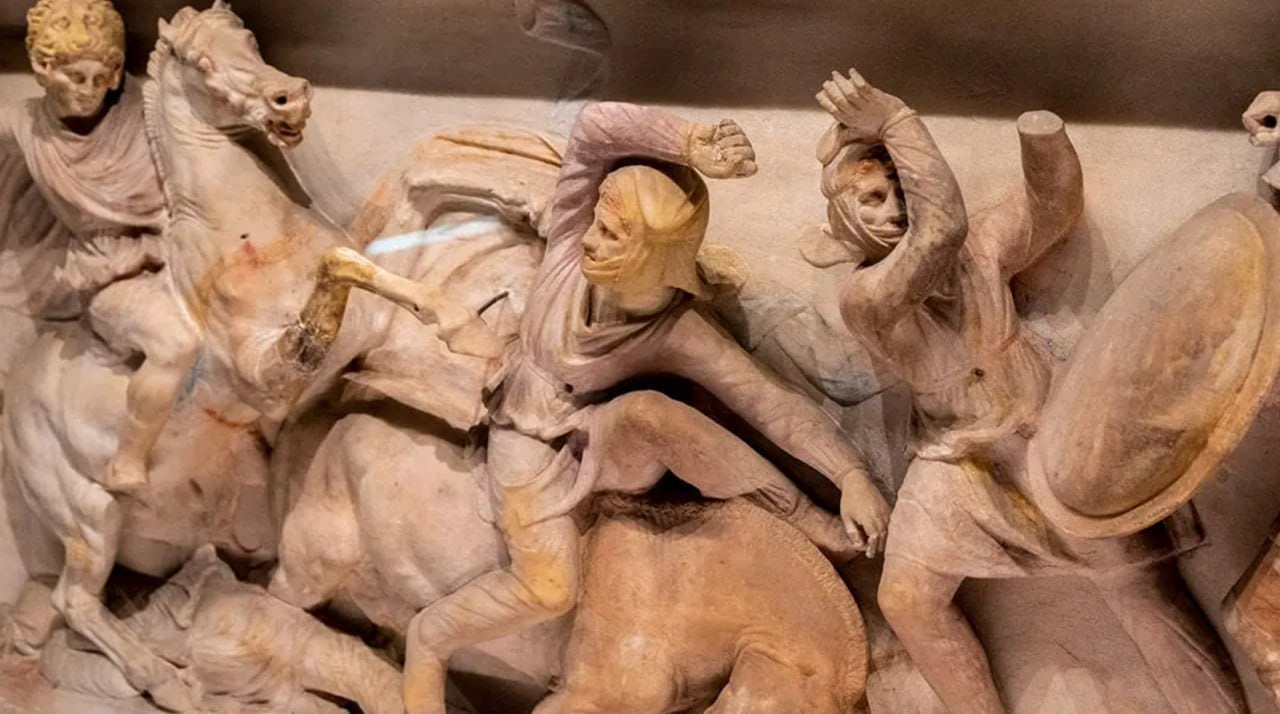
The chief exhibit, perhaps, of the Istanbul Archaeology Museum, the so-called Alexander Sarcophagus, like much in Turkey, does not correspond to its name in the least
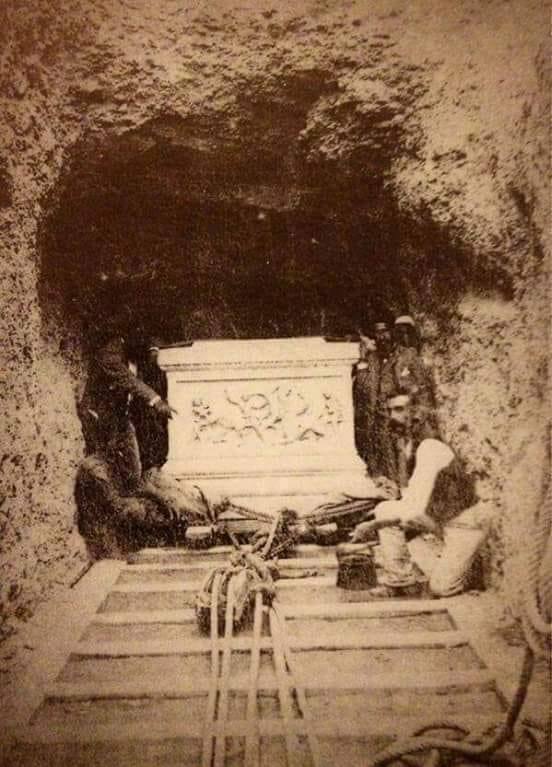
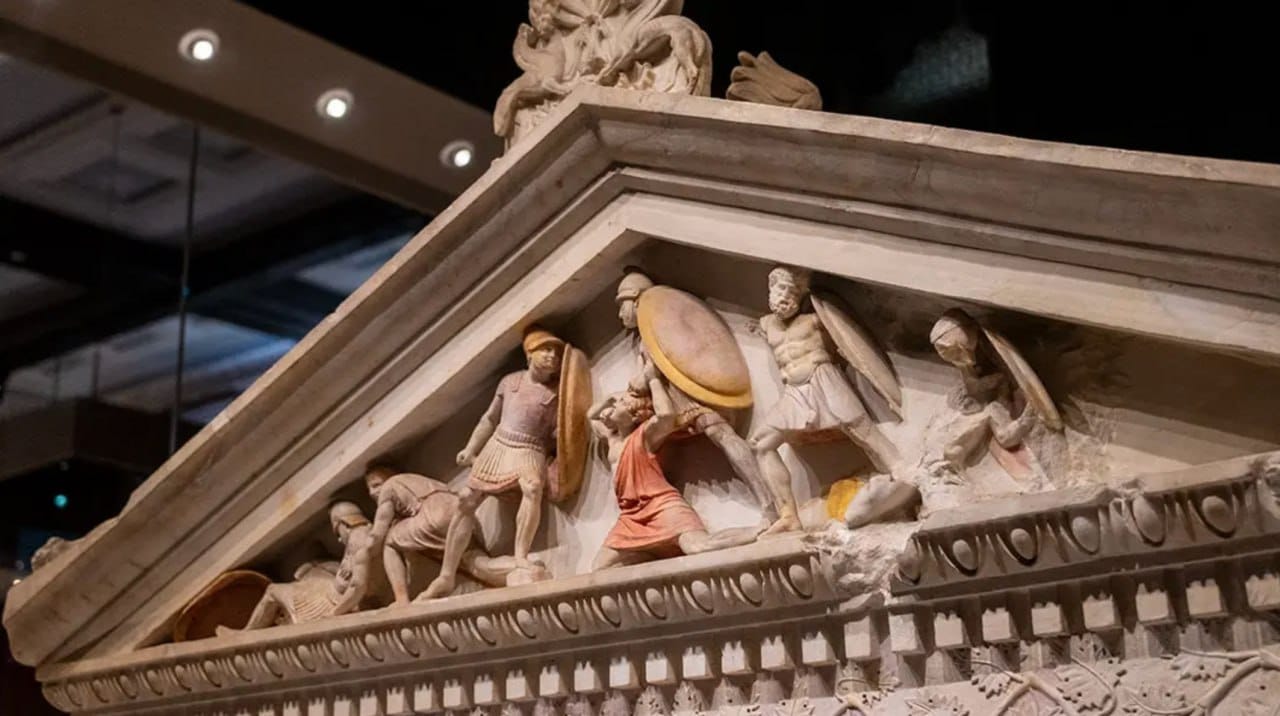
The chief exhibit, perhaps, of the Istanbul Archaeology Museum, the so-called Alexander Sarcophagus, like much in Turkey, does not correspond to its name in the least. In truth, it is connected with Alexander only by a coincidence of dating and by the fact that the king appears in one of the scenes on its relief façades.
The sarcophagus was found by Osman Hamdi Bey, director of the Imperial Museum of Istanbul, in 1887 at Sidon, in Lebanon. Carved from Greek Pontic marble, the most sumptuous of a fairly large number of sarcophagi discovered in two underground chambers, it was at once proclaimed to be the sarcophagus of Alexander the Great himself.
It has since been established that the tomb in which the sarcophagus was discovered belonged to Abdalonymus, the last king of Sidon, whose accession was connected precisely with Alexander the Great's battle against the Persians in 333 BC, hence the presence of a recognisable figure of Alexander in the sculptural decoration.
Nevertheless, by tradition the sarcophagus is still called Alexander's. Well, it sounds more serious, and for those who will not trouble to delve into it, even sensational. Just imagine, we have seen in Turkey the last resting place of the legendary Alexander the Great!