Prosper de Crébillon Asks for Leniency in the Preface to His Unsuccessful “Triumvirate”
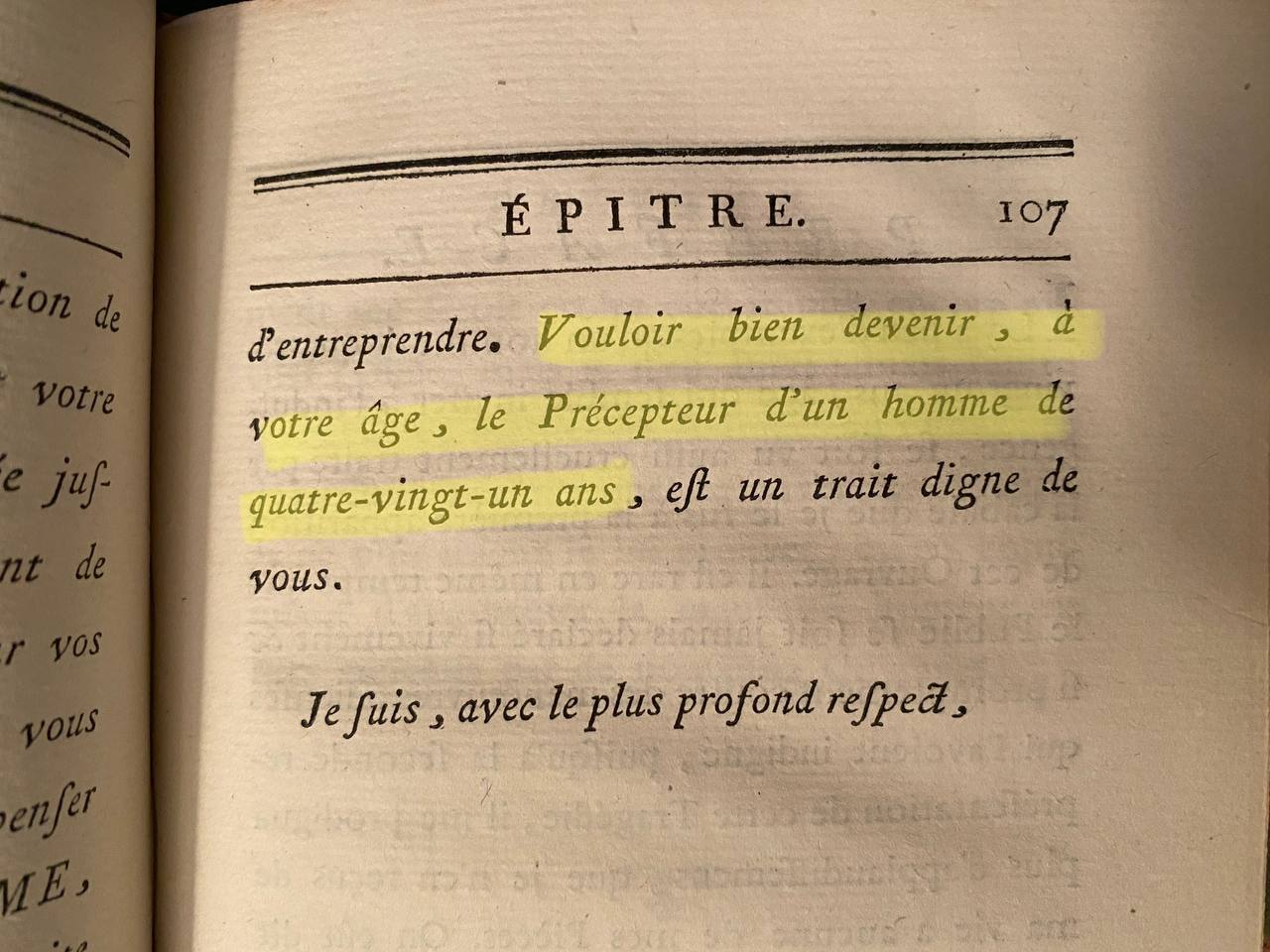
The French dramatist Prosper de Crébillon (1674-1762), named among Voltaire's chief rivals, took very hard the failure of his play "The Triumvirate", about Roman history and the events preceding the murder of Cicero, and the open rejection of it by the public. Crébillon was so despondent over the criticism and condemnation of his work that in the preface he twice invoked his venerable age of 81 and begged that an old man not be judged too severely.
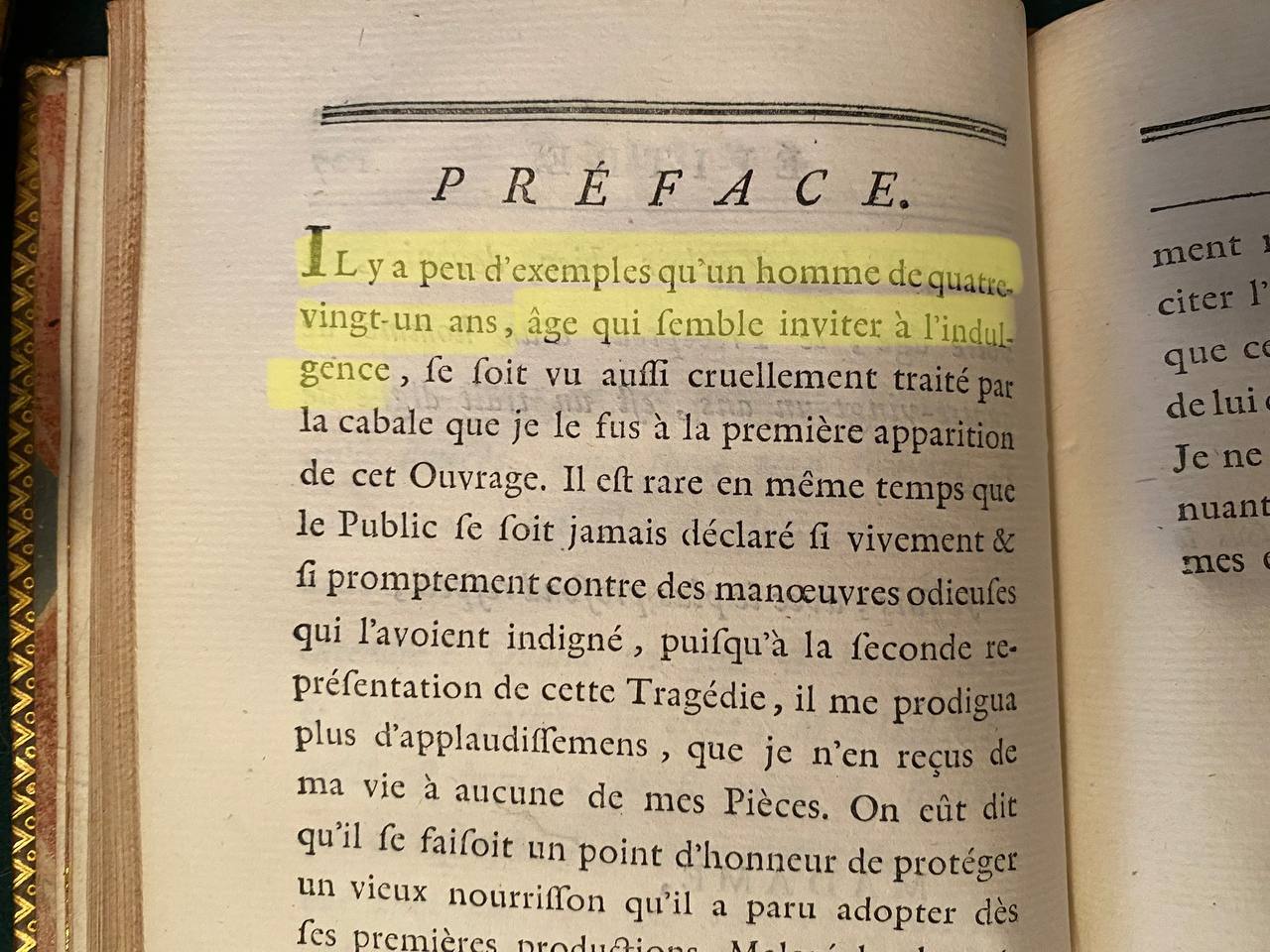
"There are several examples," writes Crébillon, "of a man of eighty-one, an age which seems to call for indulgence, having been treated as cruelly by a cabal as I was when this work first appeared."
At the same time Crébillon tries to dress up the shortcomings a little more becomingly, pointing out that seldom had the public pronounced so resolutely and so swiftly against outrages that offended it as after "The Triumvirate". He observes that the second performance of this tragedy won him more applause than he had ever received after any of his plays.
Nevertheless, the second edition of the work retained both apologetic references to the author's 81 years at the time of writing. Of the whole ornate preface, what pleased me most was the poetic device in which Crébillon likens himself, as an author, to an elderly child whom he has adopted from among his own first productions, staged many years before.
But however the ageing poet steeled himself, "The Triumvirate" proved to be the last text he published; he wrote nothing more in his life, though he lived another 7 years, becoming one of the great long-livers of French literature.