If you, too, have ever heard reels-scholars speak of Neanderthal women as hostages to a narrow pelvis that condemned them to difficult births, this claim can now safely be moved to the category of refuted myths
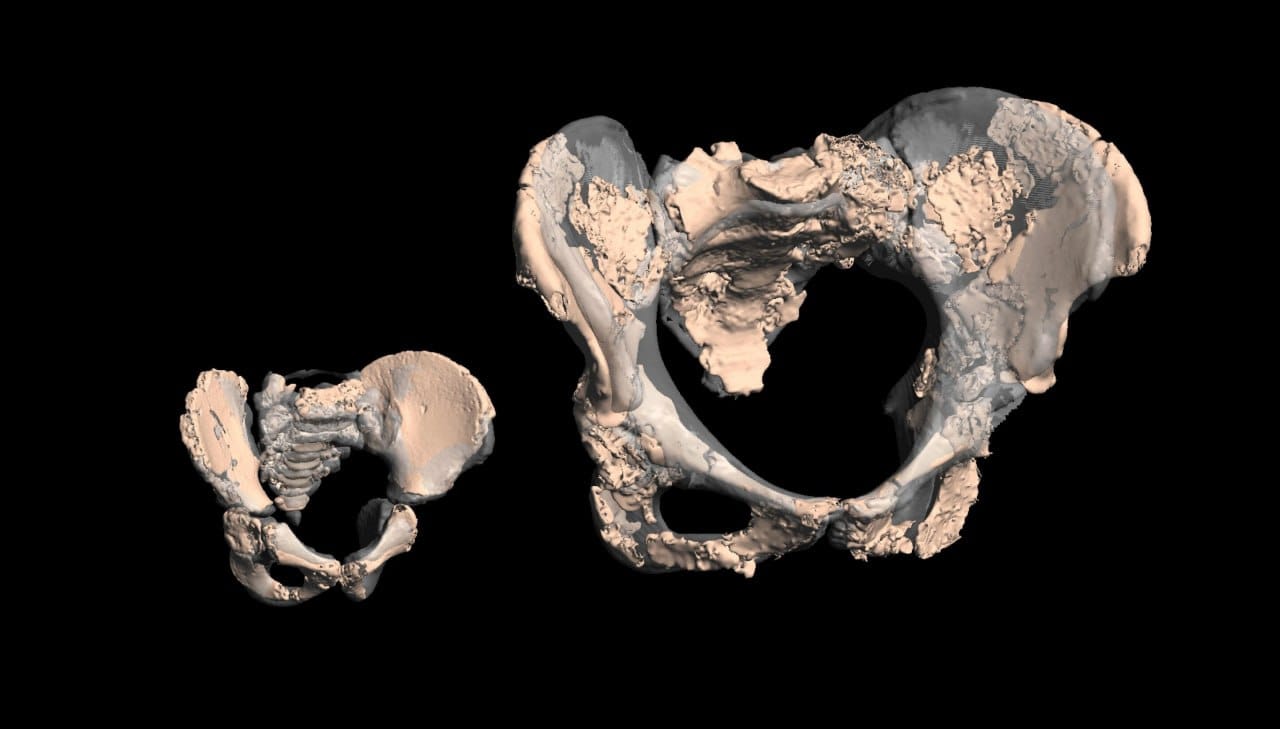
A team of researchers from the University of Zurich and the Institute for Basic Science in Busan has digitised and reconstructed the pelvic bones of four Neanderthals of different ages and sexes: an infant of one and a half years from Dederiyeh Cave in Syria, a young woman from Sima de las Palomas in Spain, a woman from Tabun and a man from Kebara, two famous sites on Mount Carmel in Israel. The bones were compared with medical scans of the pelvis of modern humans, and the researchers concluded that the parts responsible for childbirth are built similarly in Neanderthals and in modern women.
The difference lay rather in walking, which is why the Neanderthal pelvis is broader overall, differently angled, the lumbar curve weaker and the muscle levers shorter. The authors call Neanderthals "powerful, stable walkers", as opposed to modern humans, whose narrow pelvis is optimised for long-distance running. The differences are already visible in the infant of one and a half years, which means that they are built into the anatomy of the species and are not a matter of the way of life of an individual