German mining of Pushkin's grave and the clearing of mines from the Pushkin Reserve
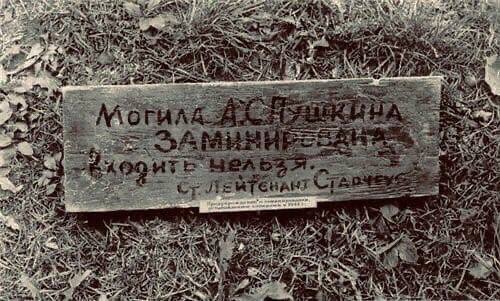
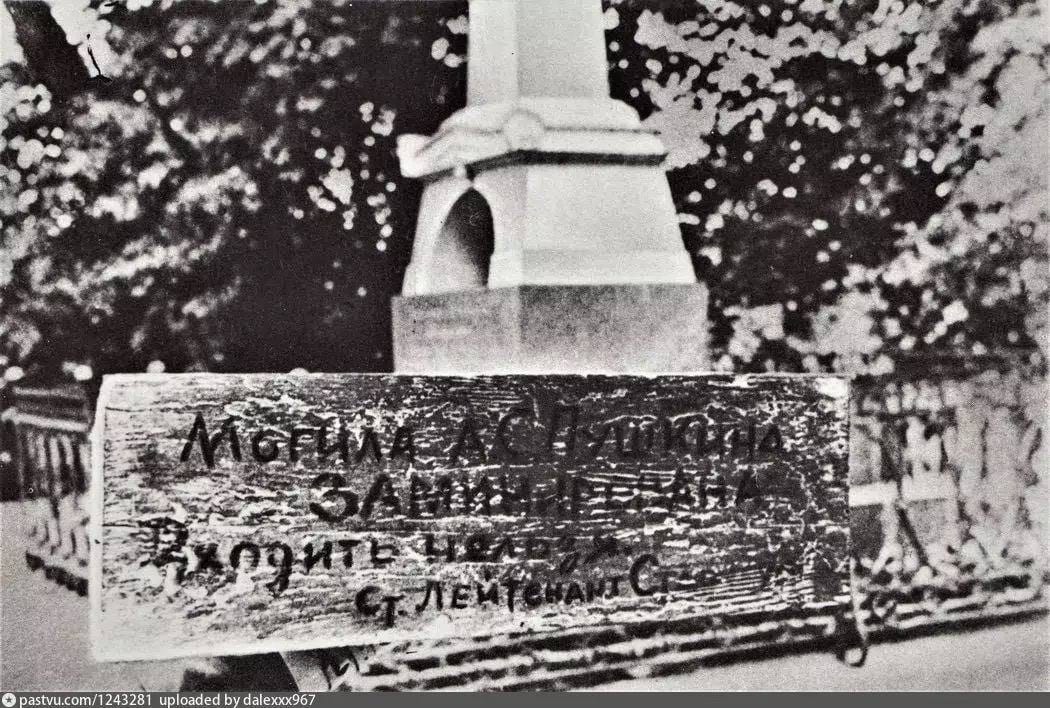
A wooden plaque with a warning inscription: "The grave of A.S. Pushkin is mined. Entry forbidden. Senior Lieutenant Starcheus."
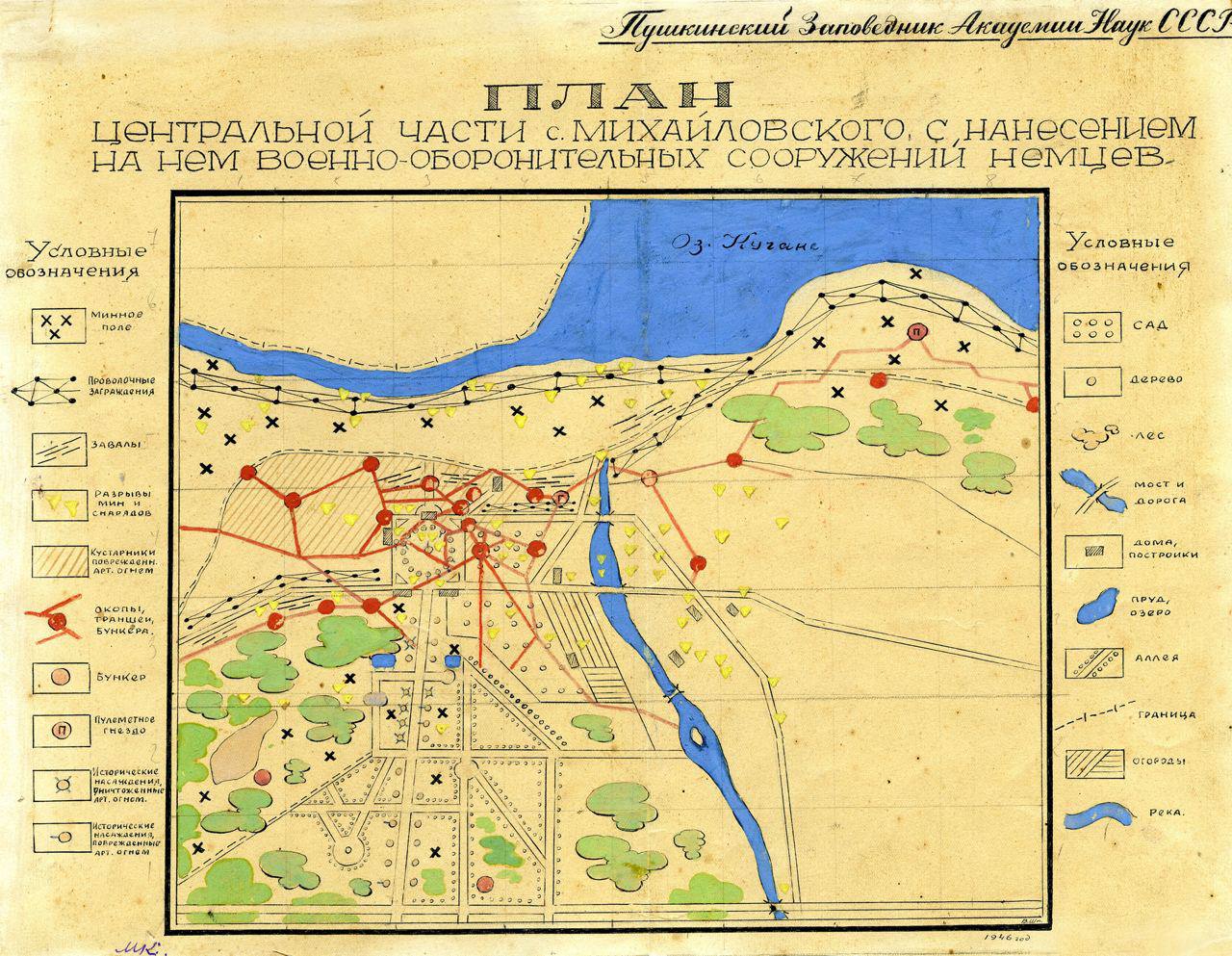
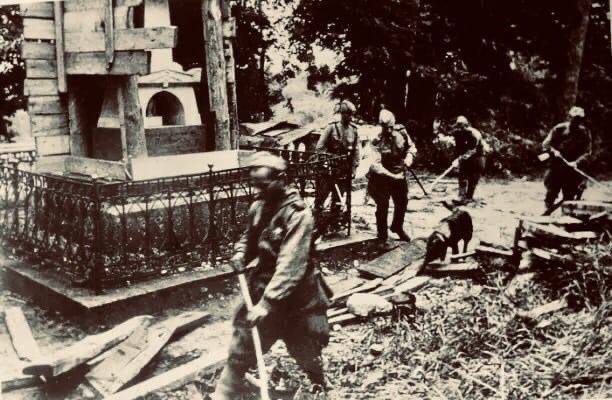
The Germans occupied the Pushkin Reserve for three years, from 12 July 1941 to 12 July 1944. The fascists were driven out of Pushkinskiye Gory by units of the 3rd Baltic Front, but before their retreat German sappers blew up the Dormition Cathedral, built as early as the sixteenth century by the will of Ivan the Terrible. In the most despicable manner, the Germans mined Pushkin's grave, packing it with so much explosive that one would think it was a military installation rather than a monument of culture. In the end, over the course of several years more than 14,000 mines, 36 landmines, 3 charges with a "surprise", state of the art for their day, and thousands of other explosive objects were defused on the territory of the Pushkin Reserve, yet mines in the estates and in the area of Pushkinskiye Gory were still being found into the 1950s. In 1953 an unexploded shell was found in the wall of the Svyatogorsky Monastery.
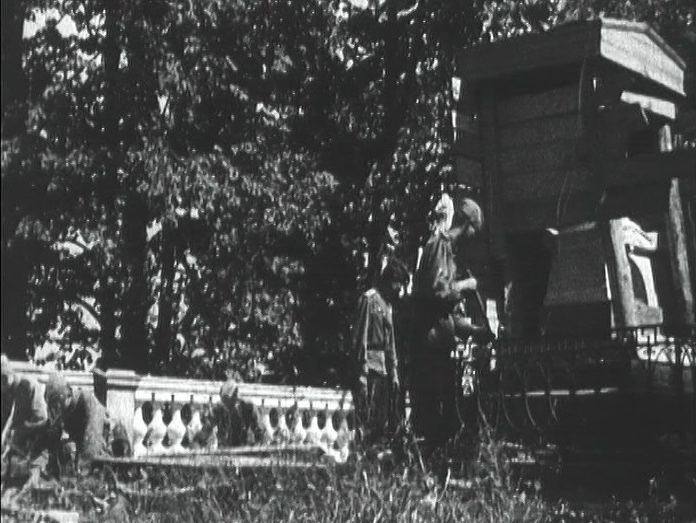
The mines in Pushkin's grave were defused without any damage, but the clearance of the reserve did not, after all, pass without casualties. By the walls of the Svyatogorsky Monastery there is a mass grave of sappers who died while defusing monuments of history.