To see how history, economics, social circumstance and politics are bound together in real life, it is enough to look at the map of how Paris voted for Macron and Mélenchon, which is painfully reminiscent of the map of the distribution of…
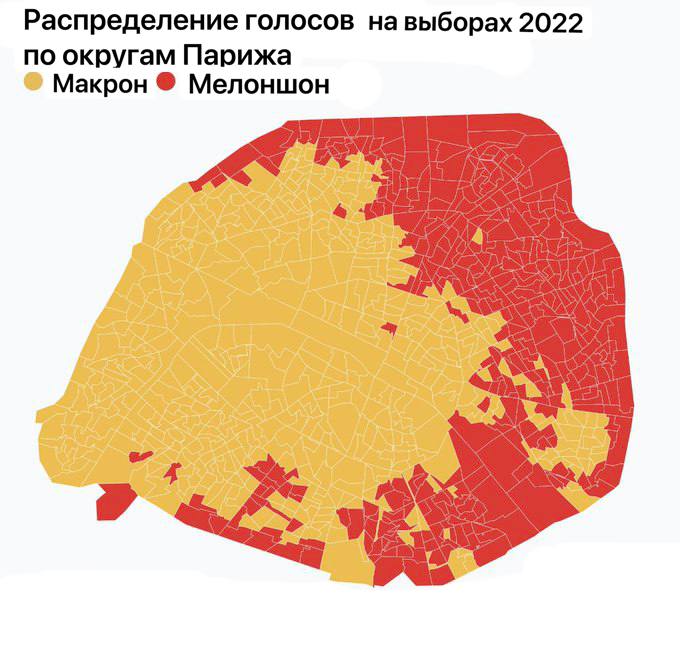
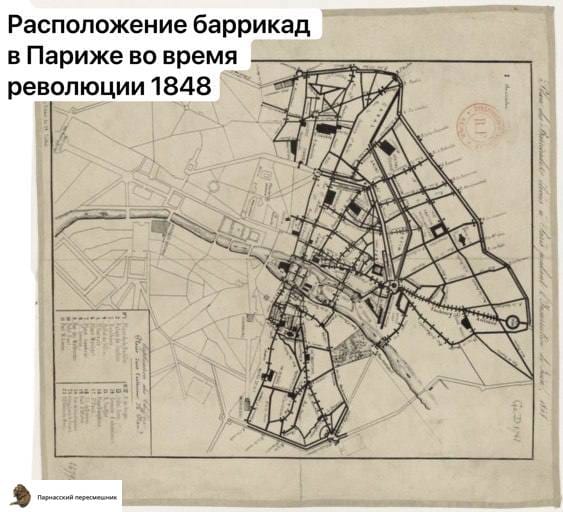
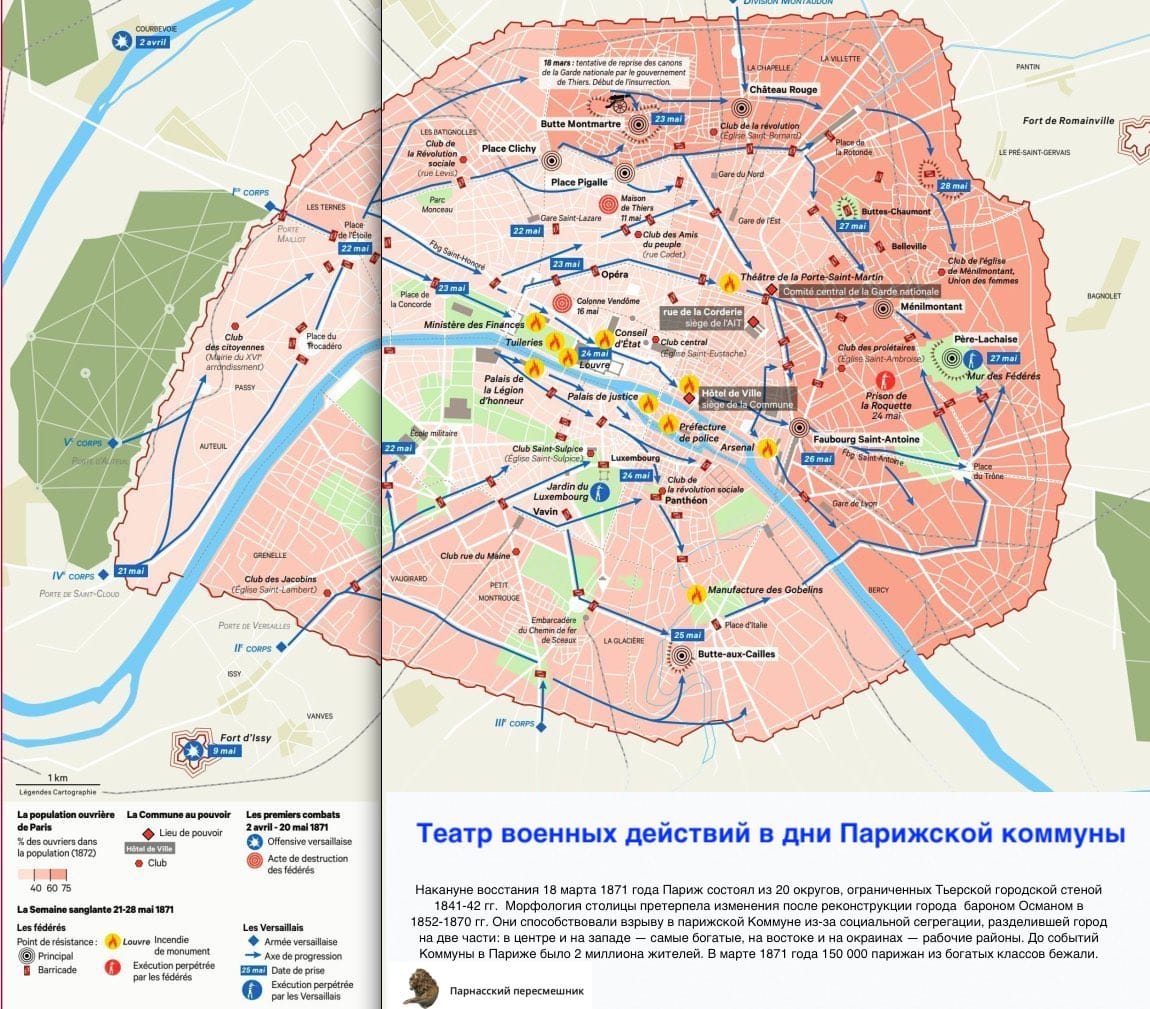
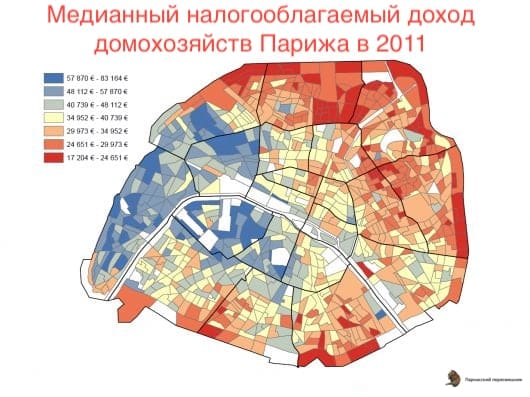
To see how history, economics, social circumstance and politics are bound together in real life, it is enough to look at the map of how Paris voted for Macron and Mélenchon, which is painfully reminiscent, on the one hand, of the map of the opposing forces during the revolution of 1848 and of the map of military tension in the days of the Paris Commune. On the other hand, it repeats the outlines of the map of the price of a square metre of housing, the map of median household income and the map of concentrated migrant settlement in our own day. Nothing comes from nowhere and nothing vanishes into nothing: past and present are far more closely bound together than we suppose, even when that past is unknown to us.
I remind you that in the first round of the French presidential election Emmanuel Macron gained 27.84%, Marine Le Pen 23.15% and Jean-Luc Mélenchon 21.95%. The second round is set for 24 April.