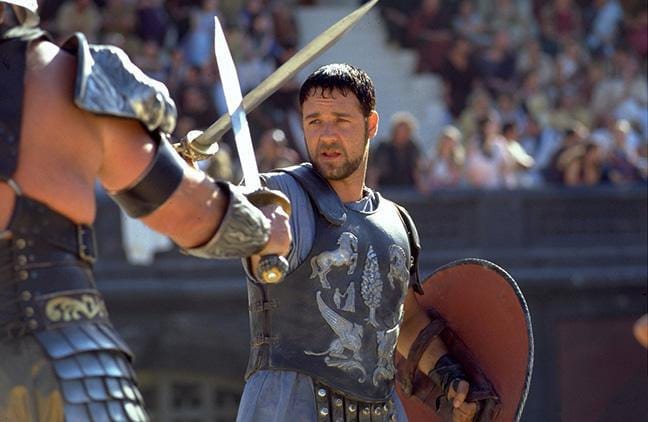
As for the leather jerkin in which Maximus the gladiator performs on the arena floor, this is yet another unpardonable stretch on the part of the film's makers: gladiators had no armour to speak of, for the most part they fought quite naked, and only in t
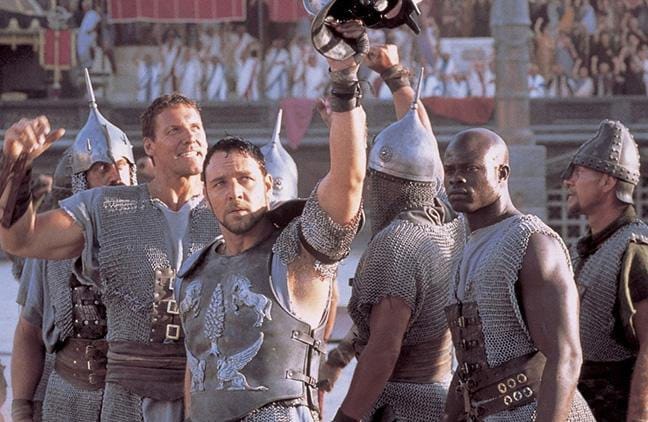
As for the leather jerkin in which Maximus the gladiator performs on the arena floor, this is yet another unpardonable stretch on the part of the film's makers: gladiators had no armour to speak of, for the most part they fought quite naked, and only in the rarest cases might there be some very simple protection, for example when the combat was a staged re-enactment, exotic, mythological or historical. In the scenes of Maximus's fights, however, he, dressed in the Roman manner, for some reason stands in for the barbarians, against whom warriors in chariots, standing in for Rome, do battle. This is not at all characteristic of genuine gladiatorial combats in Rome, and it is simply illogical: why are the barbarians dressed as Romans? This particular leather armour is a purely directorial device. There is a film legend that Crowe himself came up with the idea of adding appliqués to the armour, one after each fight. First just Persian lions, then Spanish horses, then a cypress, and by the end a woman with a boy, his wife and son, of course. Not true, but charming