A Fragment of the Treaty of Kadesh Has Been Found
Archaeologists working at Hattusa, the capital of the Hittite kingdom on the territory of present-day Turkey, have found a fragment of a clay tablet bearing cuneiform writing, which has turned out to be part of the Treaty of Kadesh. Cuneiform is a system of writing in which signs were pressed into wet clay with a pointed stylus.
The fragment was discovered near a structure that researchers call "Building E", in the Büyükkale district of Çorum province. Büyükkale is a fortified hill on which the palace of the Hittite kings once stood. Scholars studied the find for about a year before establishing what it was. Only one side of the tablet survives. According to the specialists, the fragment belongs to one of the copies of the treaty written in Akkadian, that is, in the language of international communication in the Near East of that age.
The treaty was concluded by the Hittite king Hattusili III and the Egyptian pharaoh Ramesses II in the thirteenth century BC, some fifteen years after the Battle of Kadesh, which brought to a close the long rivalry of the two powers for mastery of the Eastern Mediterranean. The agreement established peace, mutual renunciation of attack, military assistance and the extradition of fugitives. Both sides made copies of the text and distributed them throughout their dominions: the Egyptian version was carved in hieroglyphs on the walls of temples, while the Hittite one was recorded in cuneiform, in Akkadian.
The new fragment contains lines from articles twelve to twenty. They deal with people who fled from one kingdom and sought refuge in another, and also with the safety of their households. The legible parts mention fugitives from the lands of Egypt and of Hatti, as the Hittite state was called.
Fragments of the Hittite copies of the treaty were first found during excavations at Hattusa between 1906 and 1912. They are now held in the Istanbul Archaeology Museums, the Museum of Anatolian Civilisations in Ankara, the Vorderasiatisches Museum in Berlin and the State Hermitage. The new find supplements the collection and may help to restore more of the text of the original tablets. Excavations at Büyükkale continue, and the archaeologists hope to discover the missing portions of the treaty.
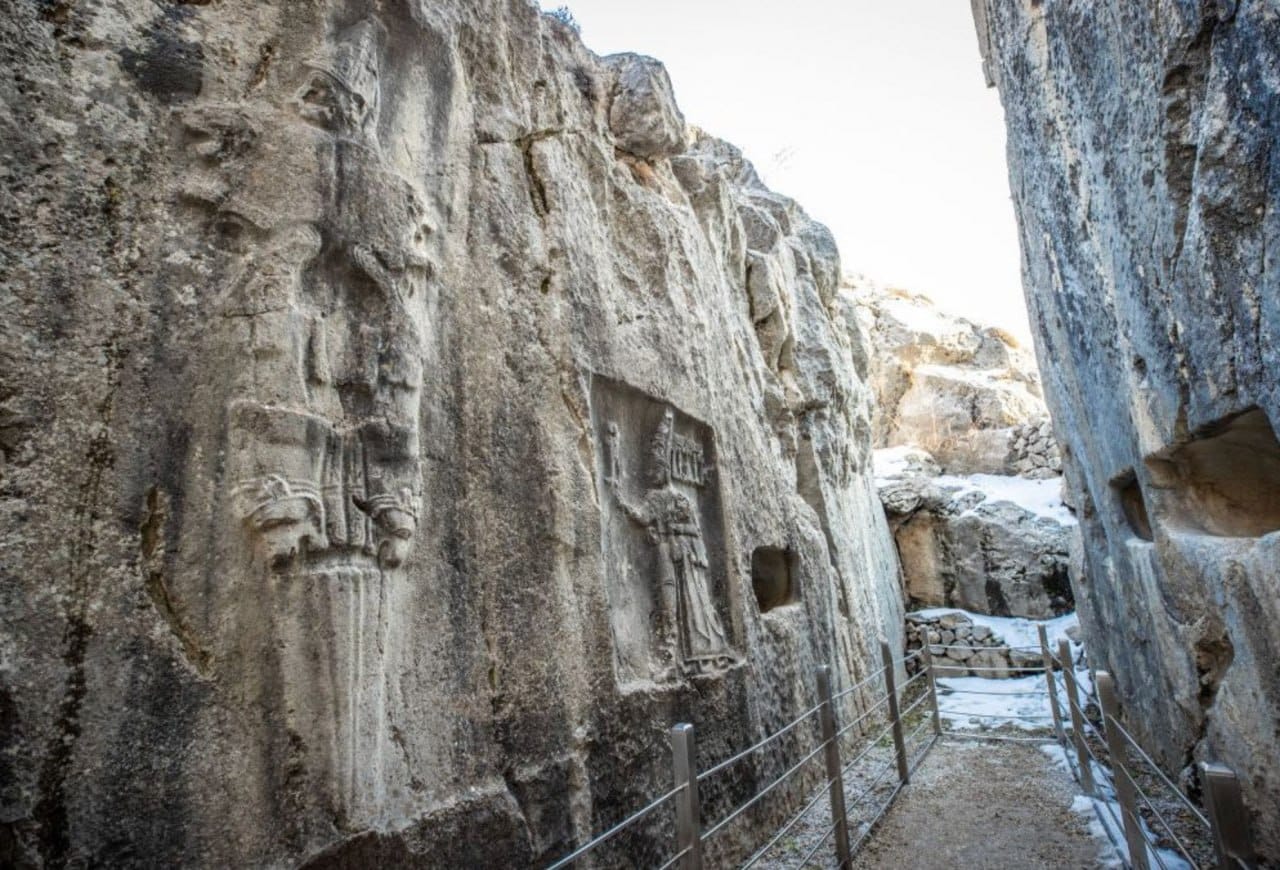
Hattusa served as the political and administrative centre of the Hittite kingdom, one of the principal powers of the Late Bronze Age. Excavations have been conducted there since 1906, and in 1986 the city was inscribed on the UNESCO World Heritage List. The find was announced by the Turkish Minister of Culture and Tourism, Mehmet Nuri Ersoy, on 21 September, the International Day of Peace.