Archaeologists discover ruins of a Byzantine-period monastic complex in Sohag Governorate, Egypt
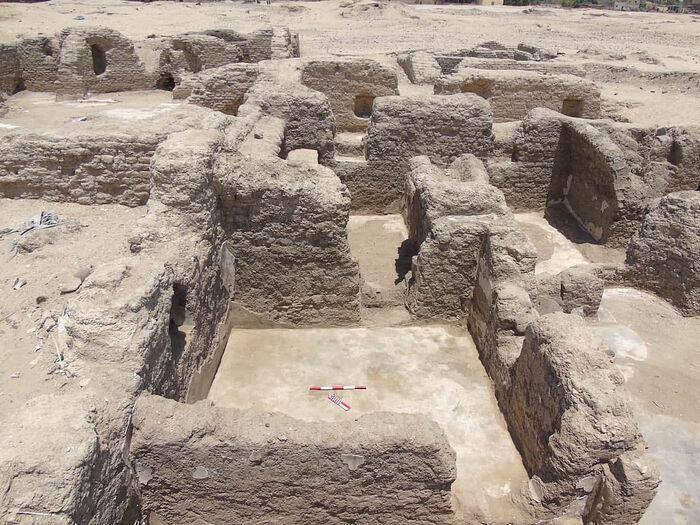
Archaeologists have discovered the ruins of a Byzantine-period monastic complex in Sohag Governorate in Egypt. The find has been described as the most comprehensive of its kind in the region.
The monastery comprises residential and communal buildings, small cell-like annexes for the monks, as well as service rooms and reservoirs built of red brick and limestone and coated with a waterproof red mortar. These structures were used to store water and to support the economic activity of the community.
The principal find was a large brick church. The basilica follows the traditional tripartite plan. The bases of the pilasters in the nave suggest that the space was covered by a central dome.
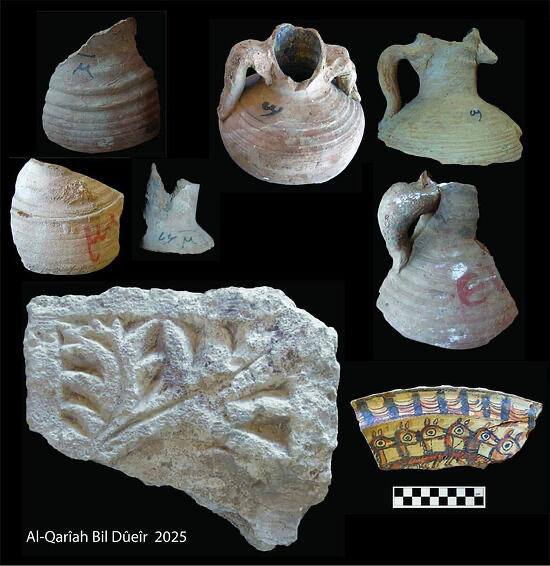
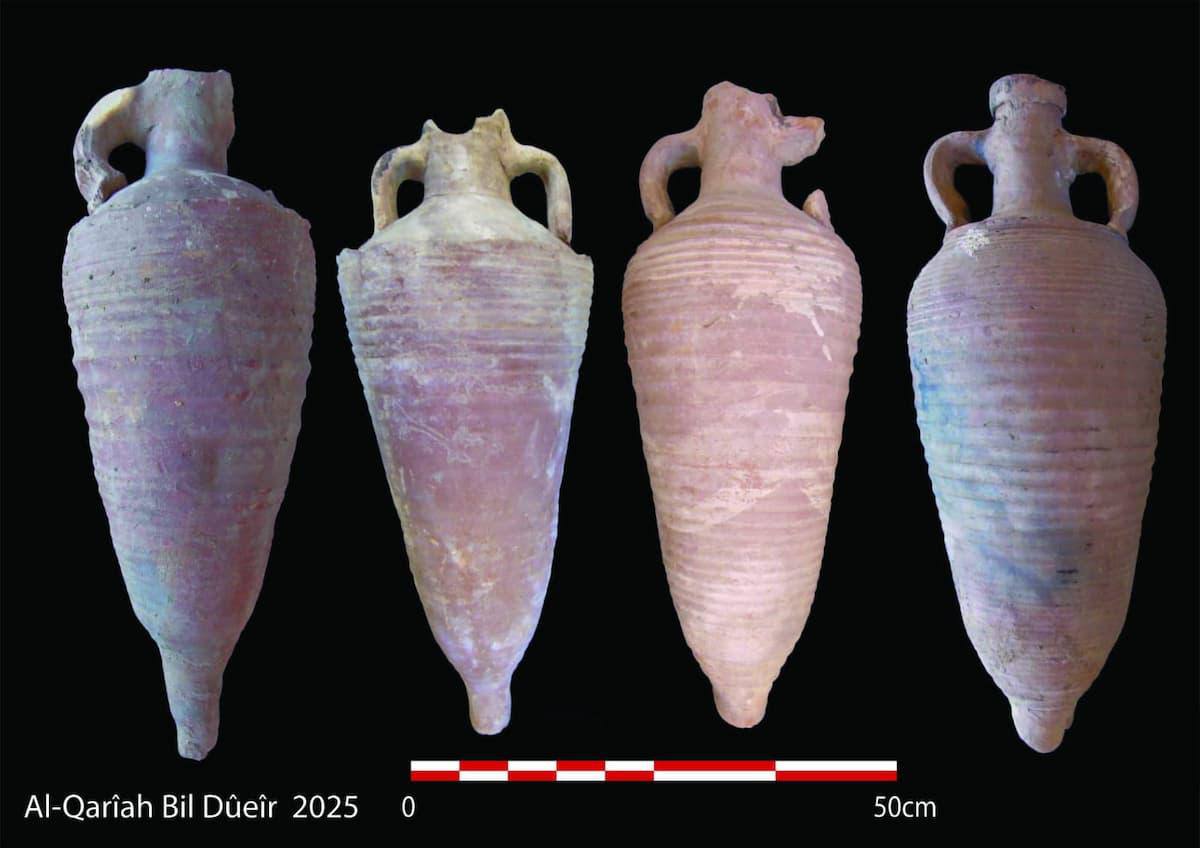
Among the artefacts uncovered are storage amphorae with inscriptions indicating their contents or ownership, as well as limestone slabs that probably belonged to commemorative stelae or gravestones.