The 61st Venice Biennale is due to open on 9 May, this time wreathed in scandal, protest and cancellation
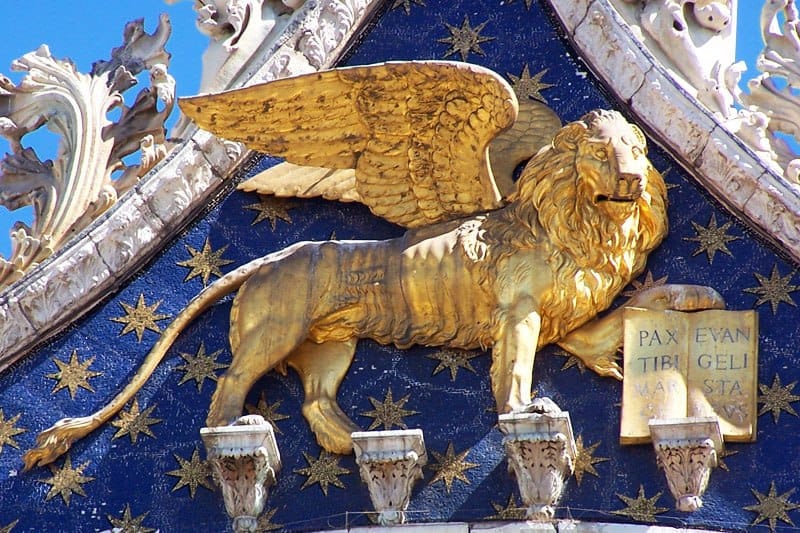
The 61st Venice Biennale is due to open on 9 May, this time wreathed in scandal, protest and cancellation. Allow me to recall a brief chronology of unprecedented contradictions and squabbles.
💀In February 2026 the Biennale's curator, Koyo Kouoh, dies at the age of 57, without having brought the project to its opening. Her curatorial statement, "to abandon the spectacle of horror and to listen to voices of lesser registers", becomes the posthumous frame for everything that follows.
🇷🇺In March the Biennale foundation, headed by its president Pietrangelo Buttafuoco, approves the return of the Russian pavilion under the title "The Tree is Rooted in the Sky", after two successive Biennales without Russia. At the same time the participation of the Israeli pavilion, temporarily moved to the Arsenale, is confirmed.
🇮🇱The collective Art Not Genocide Alliance launches an open letter demanding the exclusion of Israel; almost 200 artists and curators of the Biennale sign it. A parallel petition against the Russian pavilion gathers almost 10,000 signatures within a month.
💸In April the European Union sends the Biennale foundation a notice of its intention to terminate funding of 2 million euros because of the Russian participation, and gives it 30 days to reconsider. The Italian Minister of Culture, Alessandro Giuli, announces that he will boycott the opening ceremony in protest against Russia and demands the dismissal of the ministry's representative on the foundation's board.
🇿🇦In mid-April South Africa withdraws its pavilion after the foundation rejected its curatorial proposal, a video installation by Gabrielle Goliath, "Elegy", dedicated to the victims of the war in Gaza. The work will be shown after all, but not in the pavilion: in the Venetian church of Sant'Antonin.
🇫🇮Finland announces a boycott of the event because of Russia.
🇺🇸The US pavilion is left without state funding, and the artist Isaiah Gonzalez raises money through crowdfunding.
🔫The Biennale's international jury, chaired by Solange Farkas, publishes a declaration that it will not consider for awards the pavilions of countries whose leaders are accused by the International Criminal Court of crimes against humanity.
🗓On 26 April the Italian outlet Open publishes the correspondence between the Biennale's president Buttafuoco and the commissioner of the Russian pavilion, Anastasia Karneyeva. Owing to sanctions and budgetary constraints, the Russian pavilion will be open for only four days, from 5 to 8 May, and only to journalists; from 9 May it will be physically closed to the public, and video recordings of the performances held inside will be projected onto its walls.
⚡️On 30 April the jury resigns in full, without waiting for the opening. In their statement they cite "a commitment to the protection of human rights" and the curatorial testament of the late Kouoh. It is the first collective resignation of an awards jury before the start of the event in the Biennale's history.
🥇On 1 May the Biennale foundation cancels the Golden Lions entirely this year. In their place it introduces the Visitors' Lions: the main awards will now be decided by the public, voting for the best national pavilion and the best artist of the main exhibition. Russia and Israel, barred from the Golden Lions, take full part in the contest for the Visitors' Lions, which the foundation formulates as "a principle of inclusion and equal treatment".
🎇The awards ceremony is postponed from 9 May to 22 November, the last day of the Biennale, so that the voting can run throughout the season.