An outstanding Netherlandish painter and draughtsman of the 15th and 16th centuries
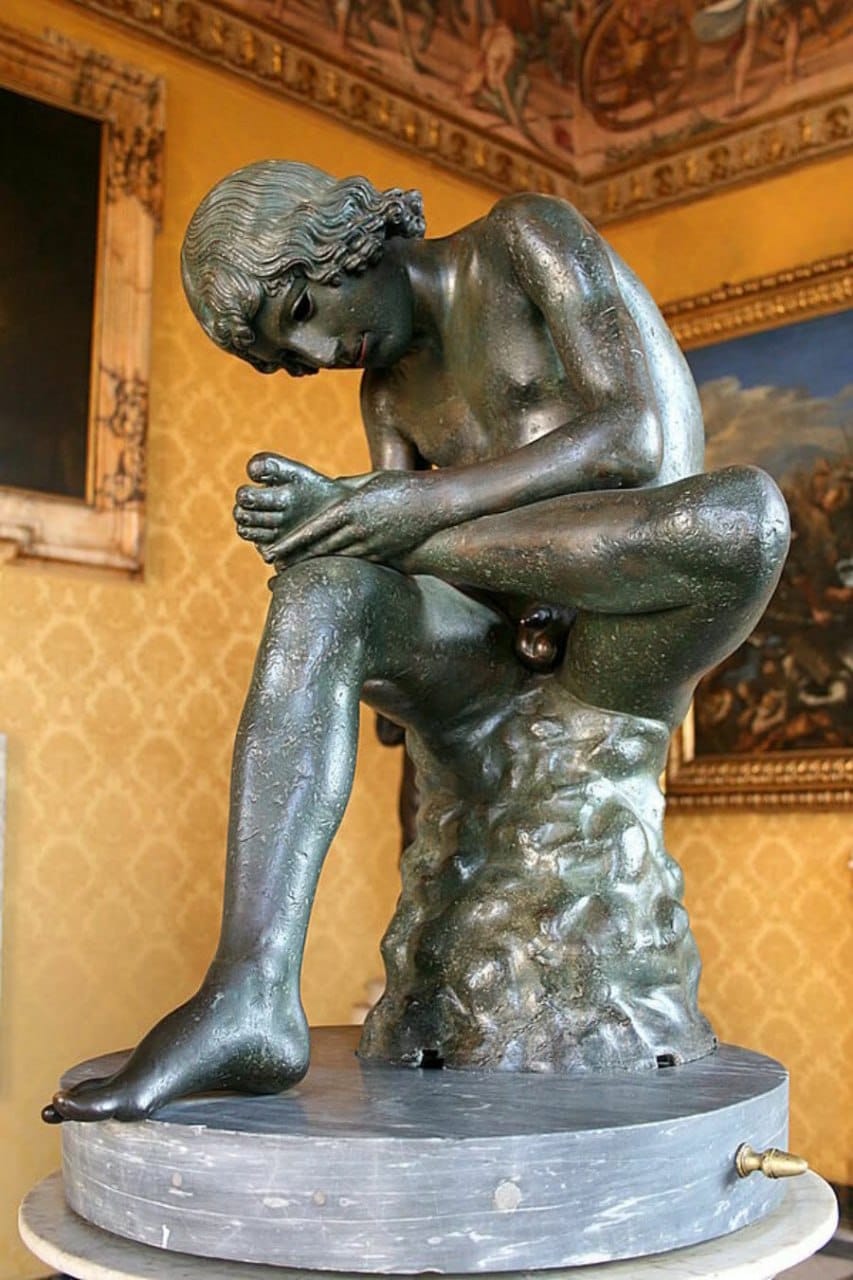
The outstanding Netherlandish painter and draughtsman of the 15th and 16th centuries Jan Gossaert, also known as Mabuse or Johannes Malbodius, travelled to Rome in the autumn of 1508 in the retinue of Philip of Burgundy. Margaret of Austria, Regent of the Netherlands, had sent Philip as ambassador to Pope Julius II to negotiate the right of the Burgundian rulers to appoint to ecclesiastical posts in the Netherlands.
Gossaert was taken along to sketch the ancient sculpture and monuments that the embassy would come across on its way. Philip's secretary remarked that his patron was enchanted by antiquities and had instructed "the most famous painter" to copy them. Thus Gossaert became one of the first northern artists to see antiquity with his own eyes. Before the journey to Rome he had painted in a Late Gothic manner, overloaded with ornament and with no grasp of Greco-Roman plastic form. He returned home with a new style, and his success set off a fashion for pilgrimage to Italy. From then until the age of Rubens it was held that a Fleming was bound to have seen Italy.
After Italy, Gossaert introduced mythological subjects with nude figures into the northern tradition.
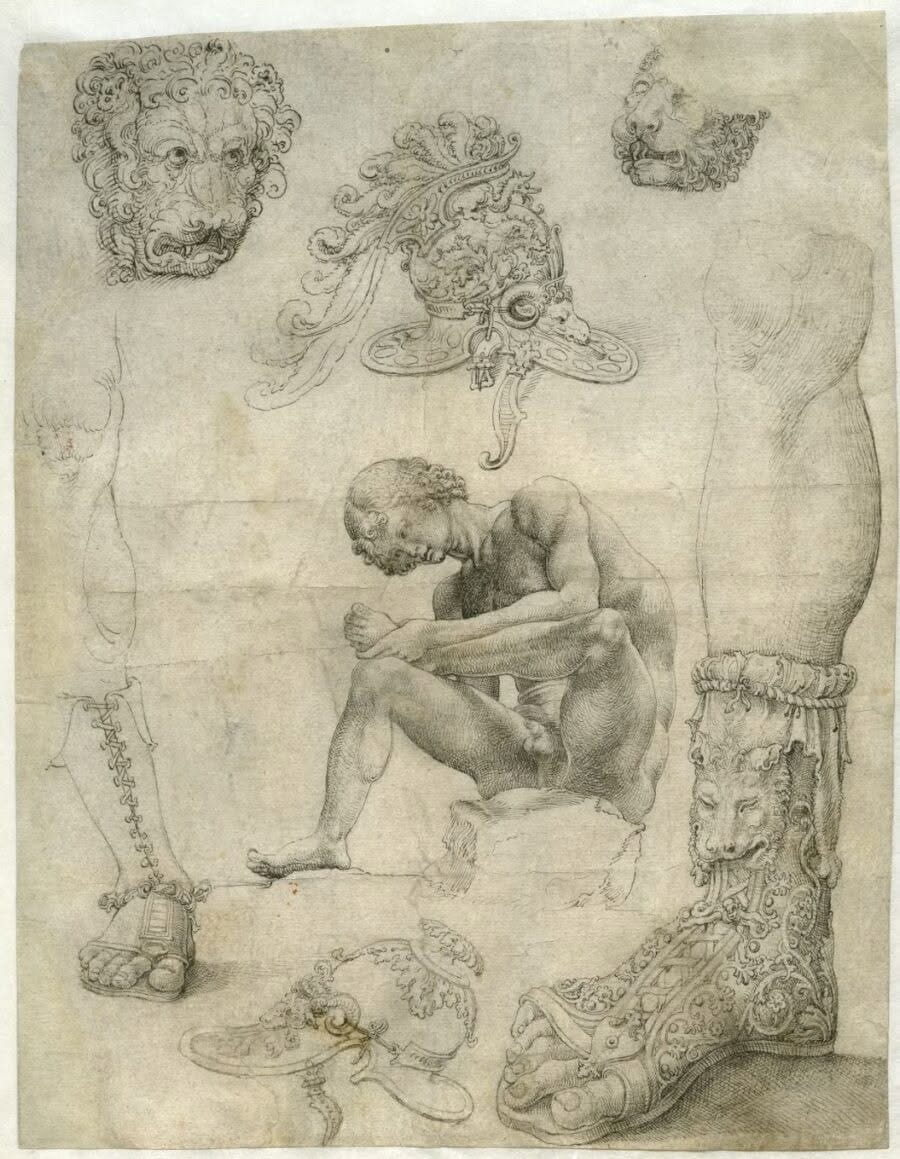
Only four of Gossaert's Roman sheets have survived to this day: the sheet with the Spinario from the university library in Leiden, the ruins of the Colosseum from the Kupferstichkabinett in Berlin, the so-called Apollo Citharoedus from the Accademia in Venice, and the Capitoline Hercules from a private collection in London.
The Spinario is a Hellenistic bronze statue of a boy removing a thorn from his foot. At that time the celebrated sculpture stood in the Palazzo dei Conservatori on the Capitoline Hill, where it stands still. Look closely and you will notice that the artist gave the statue living features, altering both face and body; this is held to have been the beginning of the use of ancient sculpture as models for living figures in mythological and biblical scenes.