In the Skagerrak off the coast of Norway, at a depth of some 600 metres, an eighteenth-century merchant ship has been found almost intact
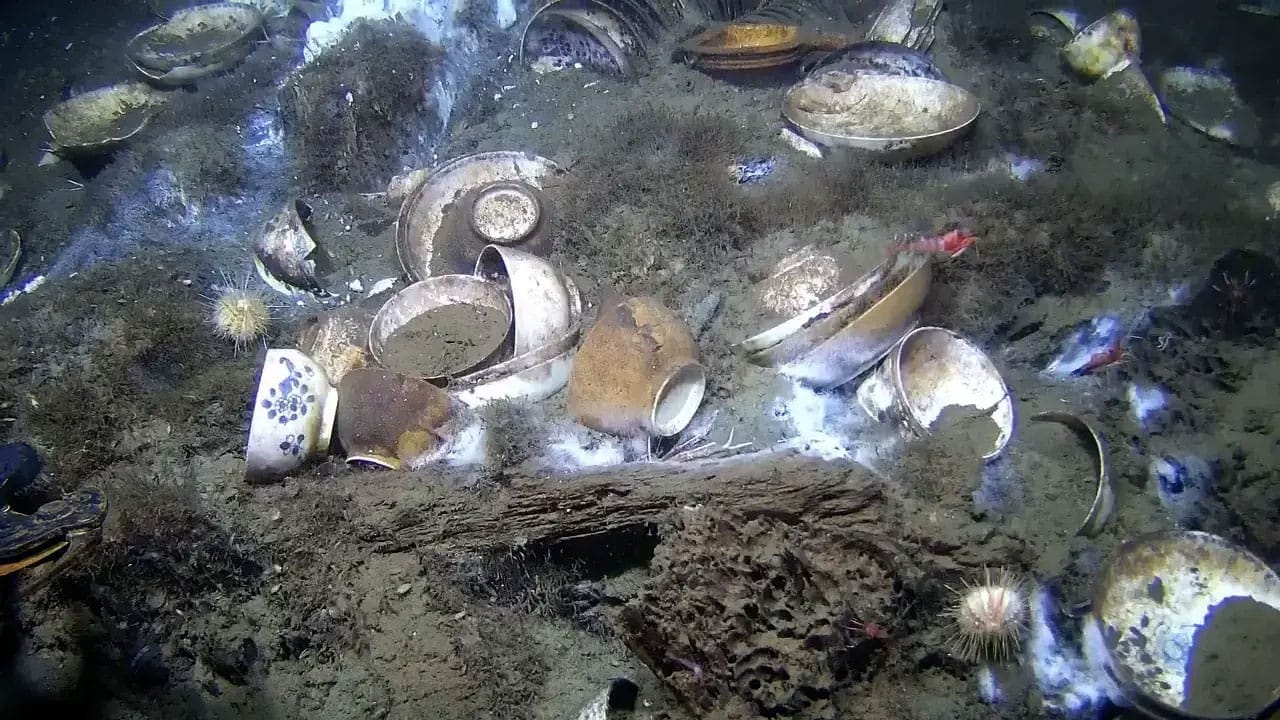
Usually a shipwreck leaves behind little but potsherds, yet here whole stacks of well-preserved tableware lie on the seabed, and alongside the plates and cups there is glass, chandeliers and sealed crates. The Chinese porcelain was raised by a robotic manipulator fitted with suction cups.
The find tells us something about how global trade was arranged in the age of the late Baroque. A small northern vessel was carrying Chinese porcelain, to all appearances from Gothenburg, Copenhagen or Amsterdam. The East Indies conducted their dealings with the Scandinavian countries through intermediaries.
The marine archaeologist Ivar Arrestad says that the value of the find is not merely aesthetic: it is material for economic history, not least because the cargo has been preserved in the deep water