Symbolism in portraits of Maria Leszczynska, wife of Louis XV, with lilies, a sphinx and oak
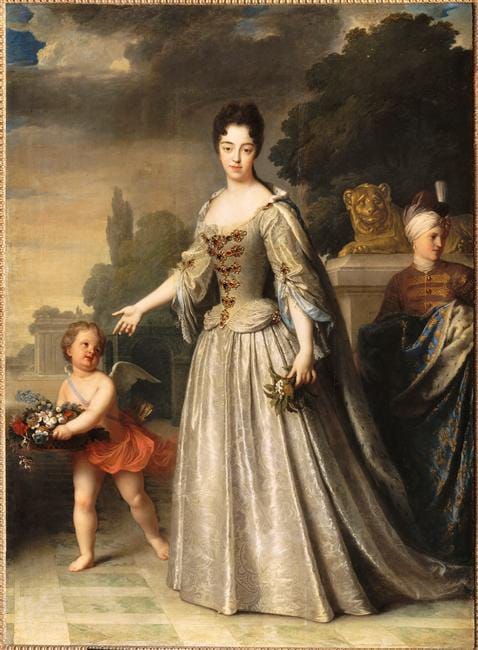
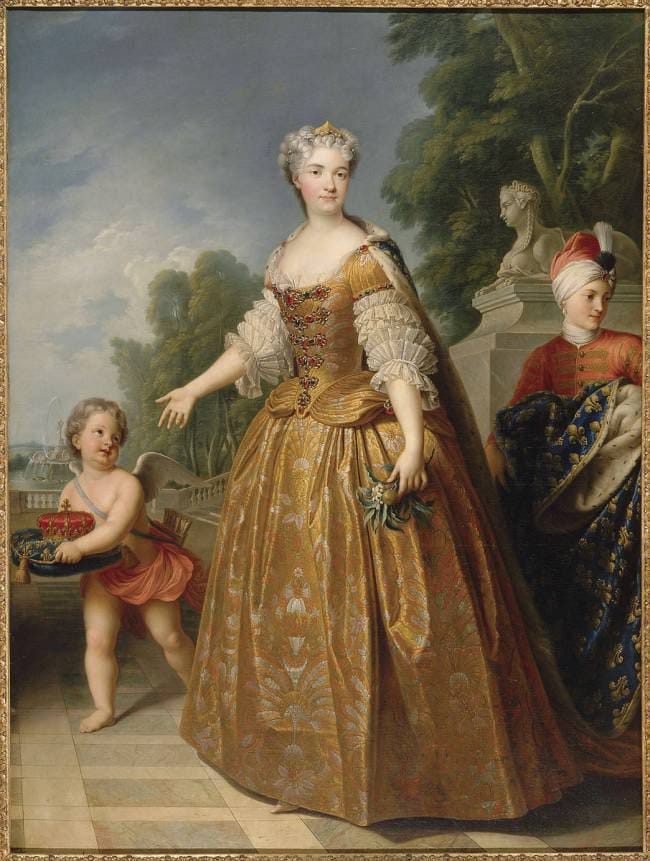
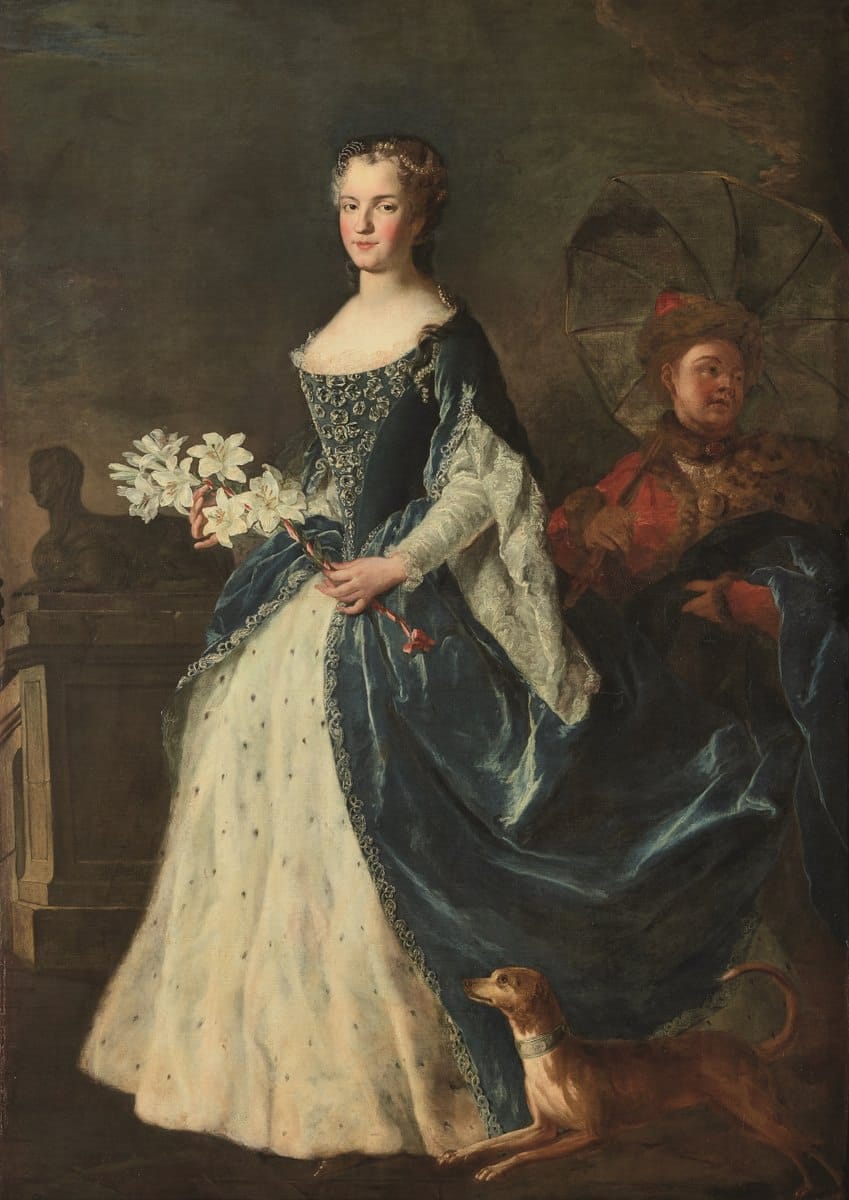
I have three similar eighteenth-century portraits for you. The first shows Marie Adélaïde of Savoy, mother of Louis XV; the others show his consort Marie Leszczyńska, who adopts the pose of her mother-in-law in order to please her husband.
But the other details of Leszczyńska's portraits are also highly symbolic. One almost exactly copies the composition and content of the portrait of the Duchess of Burgundy, while the other is richer. The lilies, of course, symbolise not virginity but France, just as Marie herself is meant to embody the image of France, standing between a sphinx, which stands for Egypt, and a handmaid in Polish dress, symbolising Poland proper and the East. Leszczyńska, incidentally, never appears in Polish costume, and the presence of such an element in the picture is rather unusual.
There remains the open question of the oak leaves on the frames of Leszczyńska's portraits and on the pictures she painted. What sort of oak is this? Certainly not a symbol of freedom. Perhaps a sign of longevity, a striving for stability, a wish to legitimise herself, given her Polish origins?