Tyutcheva is beginning to please me quietly...
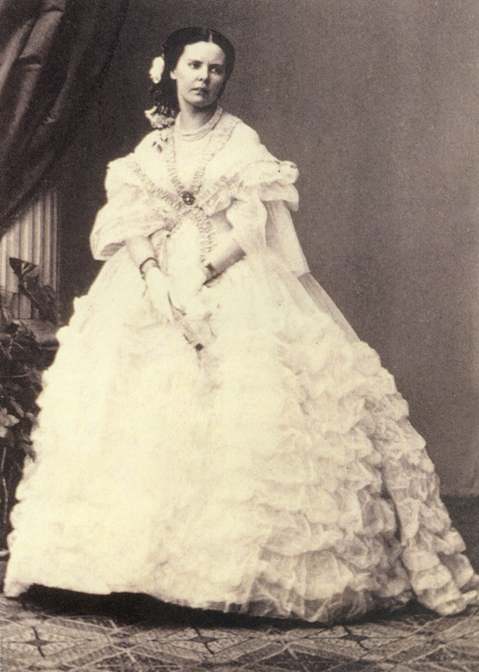
Tyutcheva is beginning to please me quietly... Little by little, but she has taken hold of me seriously and wholly
So Leo Tolstoy recalls Ekaterina Tyutcheva in his diary.
In my alternative historical imagination I sometimes wonder what would have happened had Lev Nikolayevich Tolstoy in fact married Ekaterina Tyutcheva, daughter of Fyodor Ivanovich Tyutchev.
Tolstoy, like many Moscow intellectuals of his day, was captivated by Ekaterina Fyodorovna, a clever girl and the rising star of the salon of her aunt, Darya Sushkova.
Let us picture it: Tolstoy is 28 or 29, has just returned from the Crimea after the Sevastopol campaign, and is beginning to make his way into Moscow's literary circles. Ekaterina Tyutcheva, aged 22 or 23, lives with her aunt Darya Sushkova in Moscow and shines in her salon. In January 1857 he attends the Sushkovs' evenings and notes briefly: "Tyutcheva is charming".
At the Bobrinskys' ball at the end of December 1857, Tolstoy writes for the first time: "Tyutcheva is beginning to please me quietly".
In January 1858 passions flare up.
1 January: Katya is very charming.
7 January: Tyutcheva is nonsense!
8 January: No, not nonsense. Little by little, but she has taken hold of me seriously and wholly.
19 January: Tyutcheva occupies me relentlessly. It is even vexing, all the more so since it is not love and has none of its charm.
And then comes this confession: I spoke of K. Tyutcheva to M. Sukhotin with venom. And I do not stop thinking of her. What rubbish! Yet I know that I only passionately desire her love, and feel no pity for her.
A very characteristic Tolstoyan trait. He is swept away and angry with himself for being so, analysing with icy sobriety just what he feels. And what he feels is not so much love as tenderness and a desire to be loved by her in particular.
The romance with Tyutcheva, and in this series of flare-ups life was indeed a romance, lasted until September 1858, longer than any of Count Tolstoy's previous infatuations.
A translator, a journalist, a sensitive interlocutor and a girl of high moral duty, Tyutcheva was in a relationship with Leo Tolstoy for about a year. For Tolstoy it was a great passion. Yes, he was in love and, it is said, even intended to marry. But this was still the period of his life when he was only trying to picture his ideal chosen one: first his attention was taken by Arseneva, then Tyutcheva, then Princess Shcherbatova, then Lvova. In none of them did he see the ideal wife.
Chicherin describes Kitty, too, as an exacting person:
Kitty Tyutcheva greatly enlivened the Sushkovs' salon. She was a girl of remarkable intellect and education, with a pleasant appearance and lively black eyes; with a firm mind she was reserved in character, but she did not possess that feminine grace which acts as a power of attraction for men. And since her demands were naturally high, it was hard for her to find a match. She outlived the old people and died unmarried.
Count Sheremetev notes her intellect and education:
A worthy and rare woman, excellently educated, a woman of distinction. She was the soul of her aunt's salon and the element that drew people to it, one that all reckoned with. She kept up a varied correspondence with the prominent people of her time. She had both mind and heart.
Why the romance of Tolstoy and Tyutcheva never grew into something more we shall not know, but she is held to have been the prototype of Kitty Shcherbatskaya in the novel "Anna Karenina": a sincere, warm-hearted, naive and charming girl, portrayed with tenderness and warmth as the ideal of a woman capable of spiritual growth, of high morality, of family happiness and of overcoming the frivolity of fashionable society. It is no accident that another of Tolstoy's beloved characters, Konstantin Levin, whose prototype was the writer himself, falls in love with her.
Ekaterina Fyodorovna never married; she became a maid of honour, built a school and a dispensary for the peasants on her estate, and devoted much time to charity and literary work.