Remember how everyone was recently discussing the sale at Christie's of an imperial Fabergé egg for £22 million?
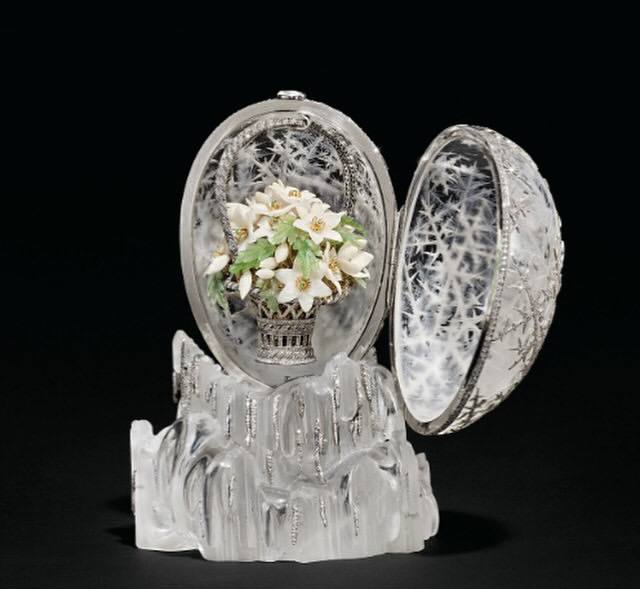
It has emerged that the "Imperial Winter Egg" is a fake.
Moreover, the maker himself has confirmed that he produced two such eggs on a private commission in the 1990s. That this "Fabergé" has nothing to do with the Russian imperial family is also indicated by the material (rock crystal instead of topaz), by the contents of the egg (anemones instead of snowdrops), and by the hallmark certifying that the piece was made for export.
Works by Fabergé often turn up on the market, but people are frequently in the grip of a delusion, supposing that everything made under this mark was intended for the imperial family and their gifts. It was not so: the jewellery house turned out a vast quantity of goods that were openly on sale. What is more, in 2011 the firm officially resumed operations. I say nothing of the enormous market in Fabergé forgeries, which flourished throughout the twentieth century. It is one of the most counterfeited precious objects in the world; perhaps only Chinese-made Cartier exists in greater quantity than spurious Fabergé.