Study of the Neanderthal Shanidar A from Iraqi Kurdistan in Scientific Reports
There is a popular story that a student once asked Margaret Mead what she considered the first sign of civilisation, expecting to hear about clay pots, fish hooks or grinding stones, and that Mead answered: a healed femur. An animal with a broken thigh bone cannot run from a predator, reach water or find food, and so it dies. A healed fracture means that someone stayed with the injured person, bound the wound, brought food and kept watch for several weeks while the bone mended. Mead is supposed to have concluded that helping another in trouble is the beginning of civilisation.
The journal Scientific Reports has published a study of the Neanderthal Shanidar A, whose remains were found in Shanidar Cave in Iraqi Kurdistan. The man died at about the age of 45, some 75,000 years ago.
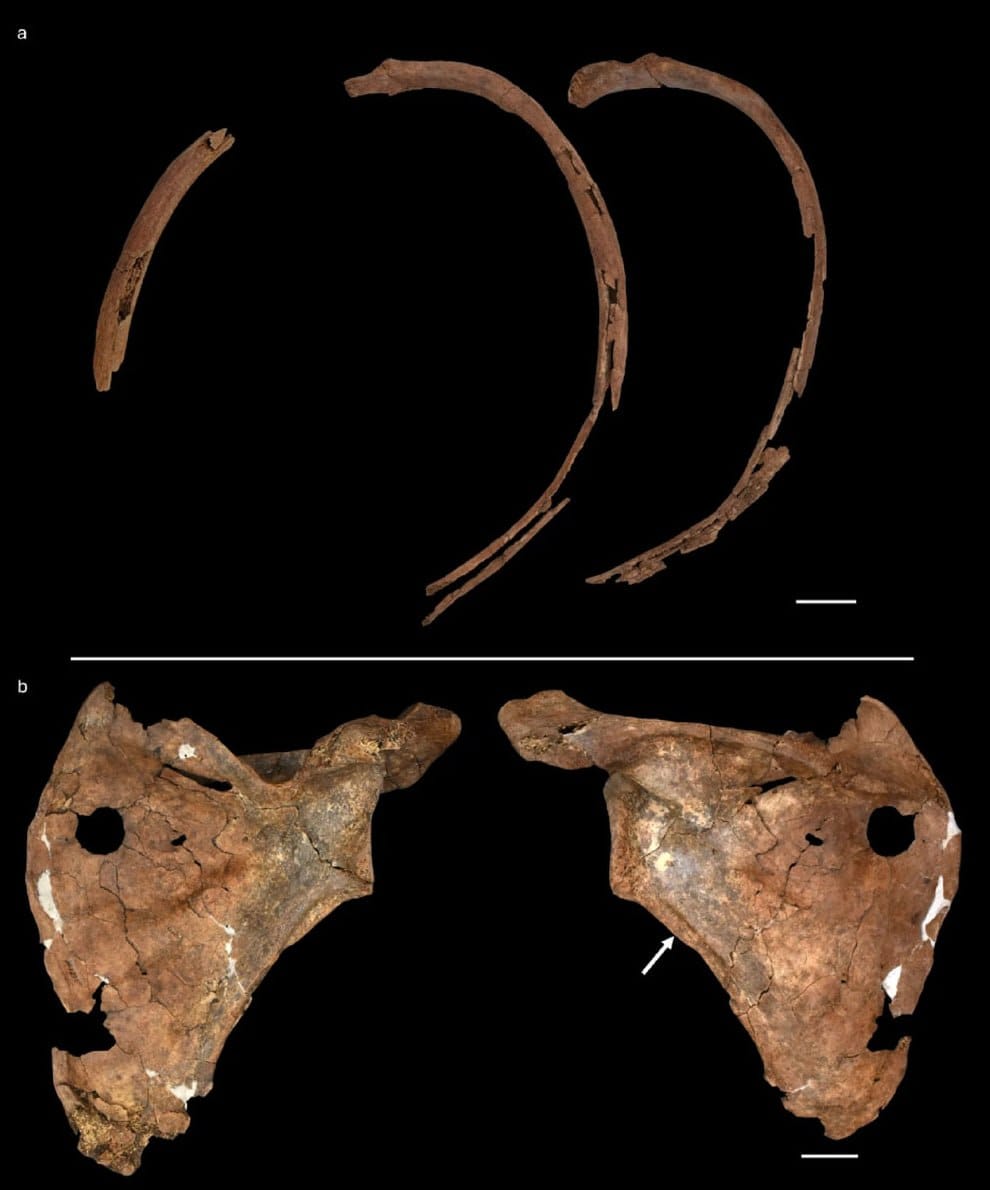
In the left shoulder blade of Shanidar A the researchers found a hole. They suggest that a weapon, most probably a sharpened stick, entered the chest from the front, passed through the lung and pierced the scapula. Similar holes are known on fossil animal bones. About a year before his death the Neanderthal had suffered injuries to the face, and one of his front teeth was broken.
Shanidar is already known for a find of this kind. Another Neanderthal, Shanidar 3, who lived about 50,000 years ago, died of a wound to the rib. He also suffered from a degenerative disease of the foot and needed long care from his kinsfolk.