A Little More on Architecture
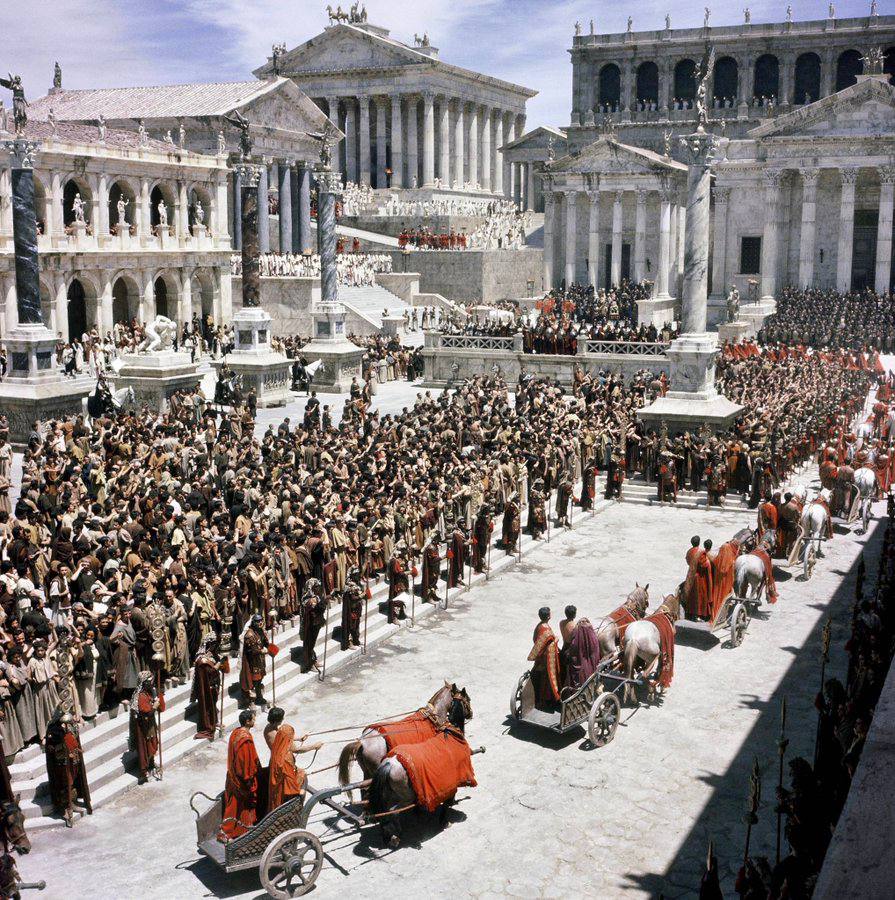
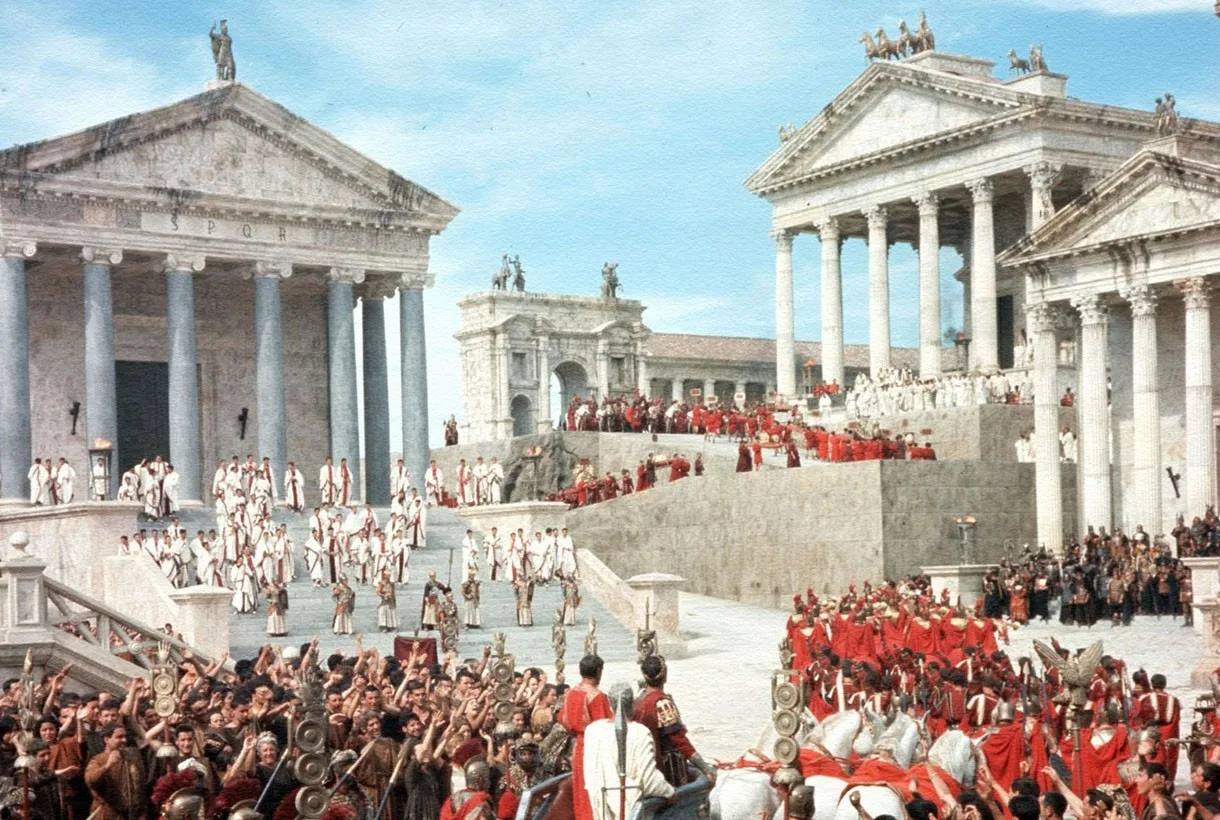
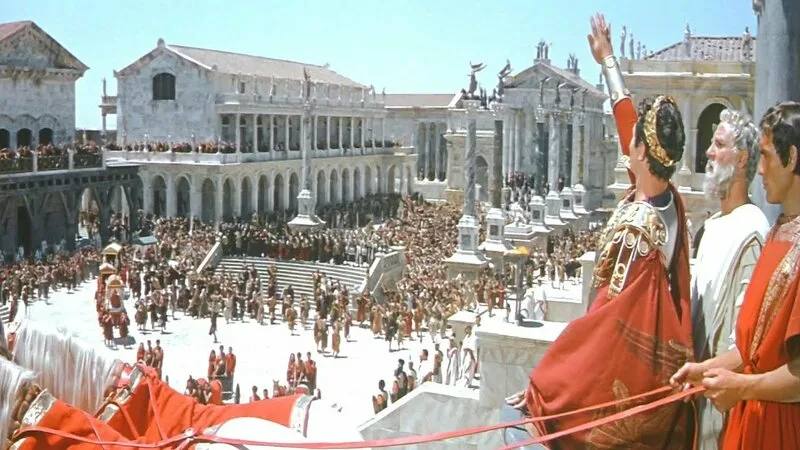
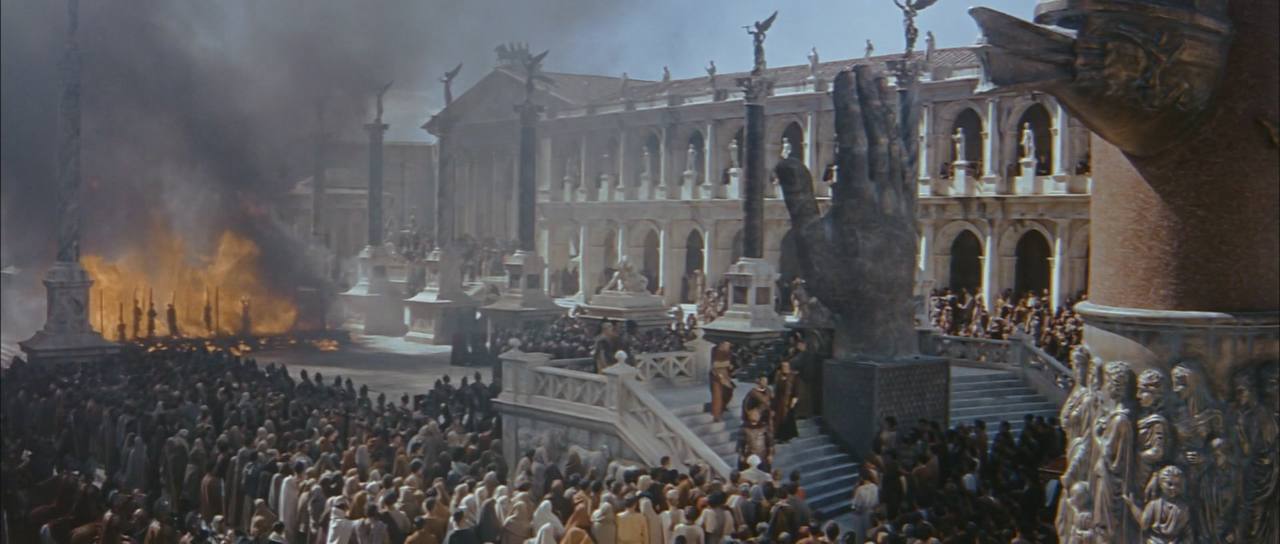
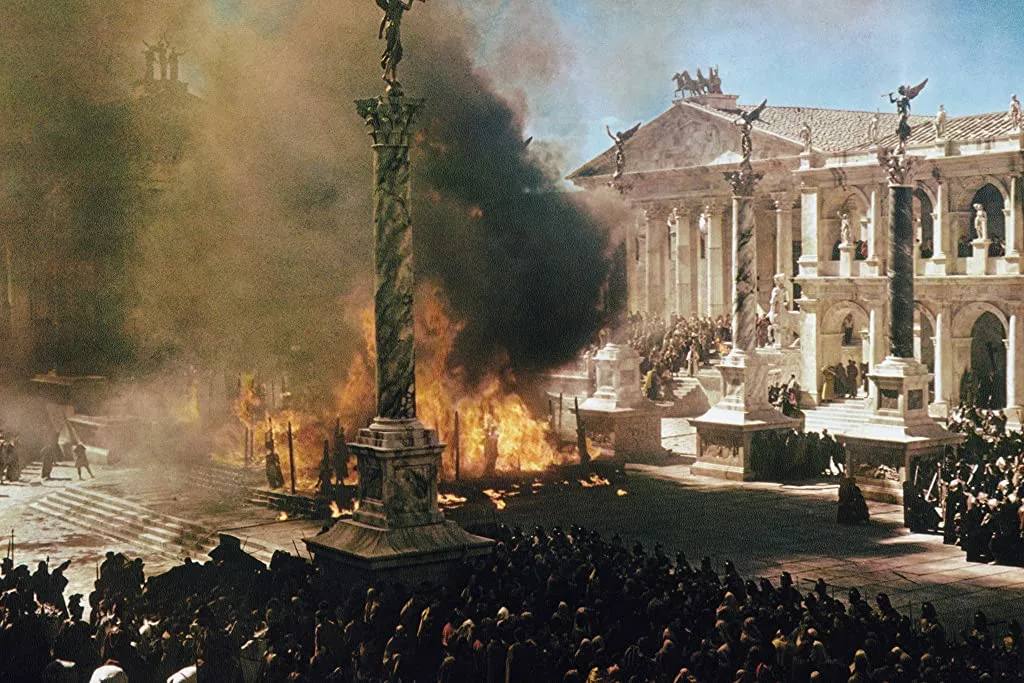
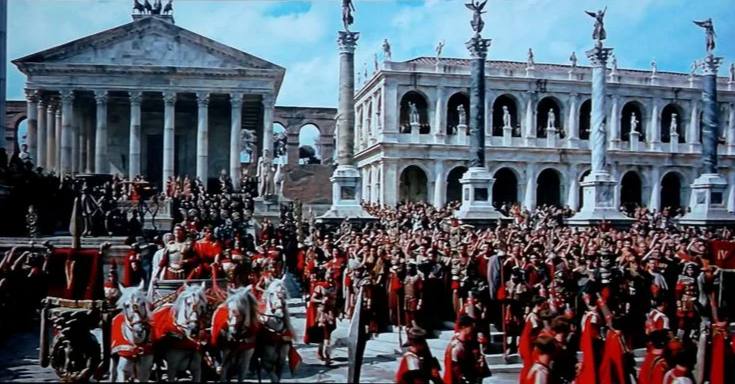
A little more on architecture. And on cinema. For the filming of The Fall of the Roman Empire (1964), a full-scale reconstruction of the Roman Forum was built at Las Matas, near Madrid. Covering 92,000 square metres, four times the size of Red Square, it became the largest open-air set in history. And it is of course this colossal labour that makes the film one of the great peplums of all time and a unique picture, obligatory viewing for anyone with an interest in the history of Rome.
Alec Guinness is superb as the great Marcus Aurelius, while somewhere nearby flit Sophia Loren as Lucilla and Stephen Boyd as Livius, mediocre by comparison.
My one reservation about the setting is the colour. We do remember, after all, that ancient buildings were not monochrome grey and white but were covered in the brightest of paintwork, producing a veritable riot of façades. In other words, the way Ancient Rome is presented in the cinema, in uniform marble hues, is in fact the very opposite of what it really was. Still, a sober palette naturally adds drama.
I shall certainly rewatch this film today, once again reflecting with sadness that never again will such epic and accomplished sets be built for the cinema, given the universal reign not merely of computer graphics but now of AI tools. Although, for comparison, the production budget of the picture was $19 million, which in today's money comes to around $188 million. Compare that with, say, the dreadful Little Mermaid at $300 million. Do you think it was worth it?