Allegories of the months in the frescoes of the Salone dei Mesi in an Italian palace
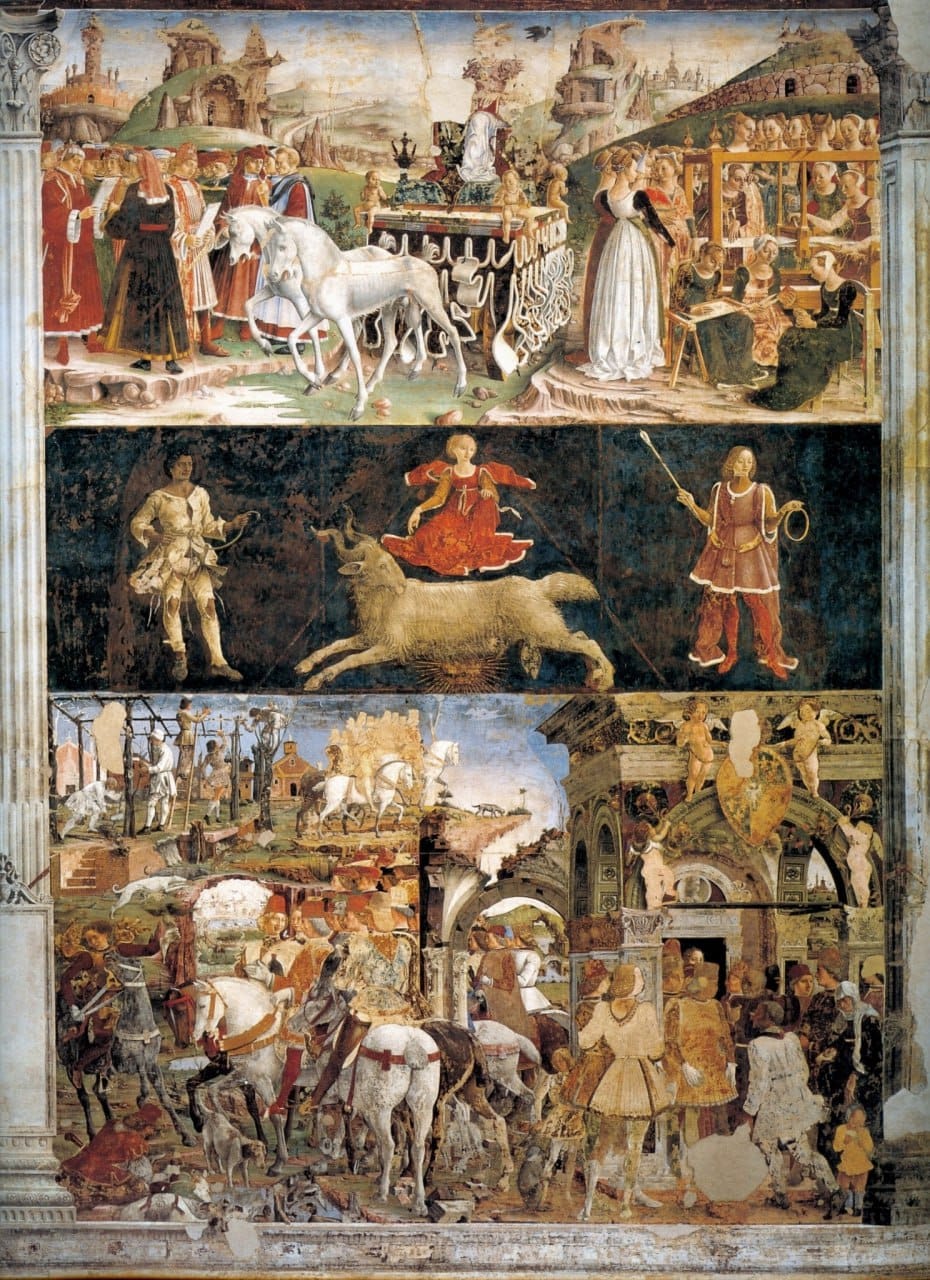
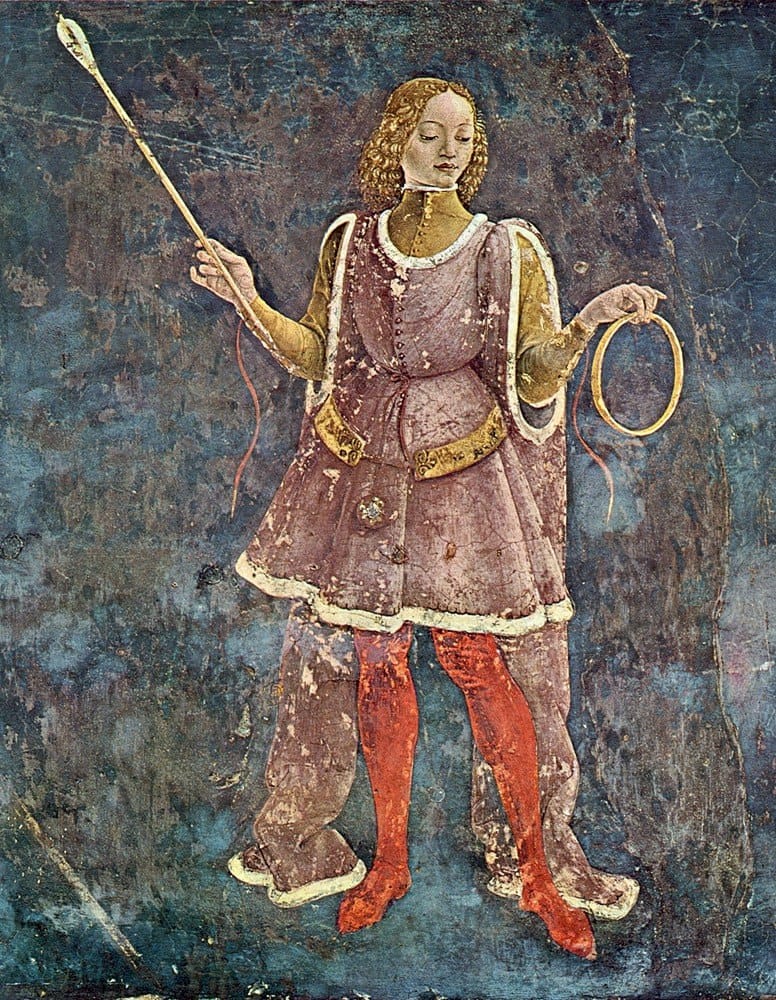
Allegory of March, fresco in the Hall of the Months in the Palazzo Schifanoia, Ferrara.
The Salone dei Mesi (Hall of the Months) is one of the masterpieces of Italian palace architecture, famous for the allegorical frescoes symbolising the months on the walls of a hall 24 metres long, 11 metres wide and 7.5 metres high.
The creators of the frescoes are said to include the celebrated fifteenth-century painters Cosimo Tura, Francesco del Cossa, Baldassarre d'Este and Ercole de' Roberti.
The south wall bears the allegories of January and February, the east wall those of March, April and May, the north wall those of June, July, August and September, and the west wall those of October, November and December.
By the eighteenth century the condition of the frescoes was deplorable, and only fragments of the original painting of the south and west walls have survived to our day, but the frescoes on the east wall and the greater part of the north wall are in fairly good order. And the allegories of the seven months from March to September are in perfectly good condition.
The allegories take the form of three-tiered friezes with a set of subjects: the upper part is the mythological embodiment of the months, the planets attending them and the patron deities in a triumphal procession. The middle register contains the signs of the zodiac, for March the ram. The lower frieze tells of the important court events of the season.
At the top of the March fresco is the Triumph of Minerva. The goddess, at the centre, is surrounded by a group of poets and judges and accompanied by women bearing the emblems of women's labour. The lower panel of the fresco depicts a hunting scene.